
2019
Concept Testing
Creating an itinerary planning app for concept testing for a major travel tech company
Developing a brand identity to anchor a startup post spin-off
CLIENT
Travel tech company, undisclosed due to NDA
SCOPE
Product strategy, Product design, User testing & analysis
ROLE
UX Designer
Project is a team effort achieved at Minitheory
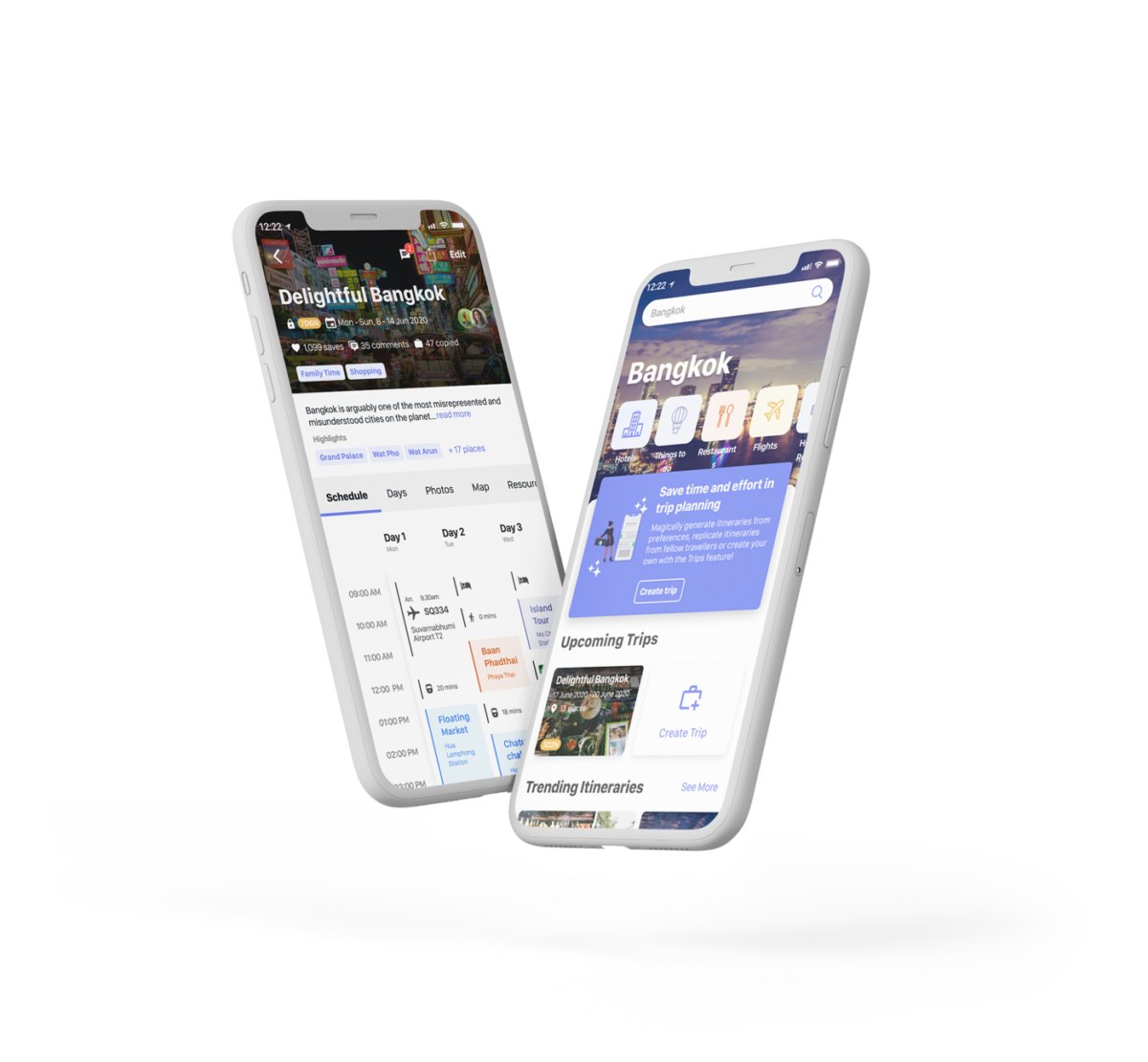
Overview
A travel company is looking to build upon its current offering – a huge database of travel recommendations built over decades. The proposed idea was an itinerary planning app that draws upon its existing database.
We were tasked to create a prototype to bring to user testing to validate the concept and answer:
How might we make the itinerary planning process easy by leveraging on our existing product offering?

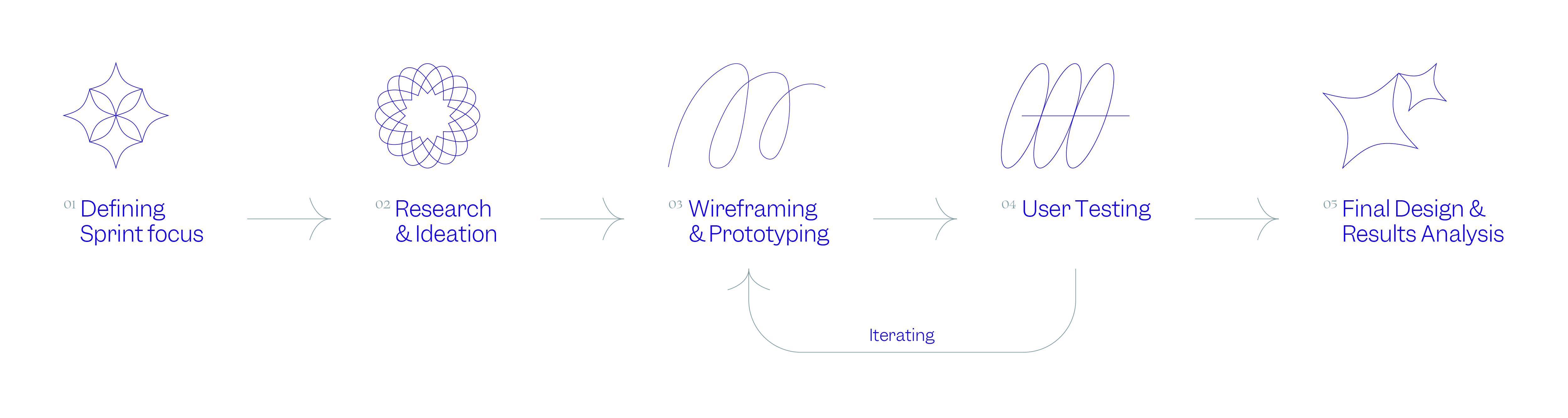
Sprint-based Approach
We proposed a design sprint since it promotes quick iterations, allowing us to bring multiple concepts for testing in a short period of time.
01
Sprint focus
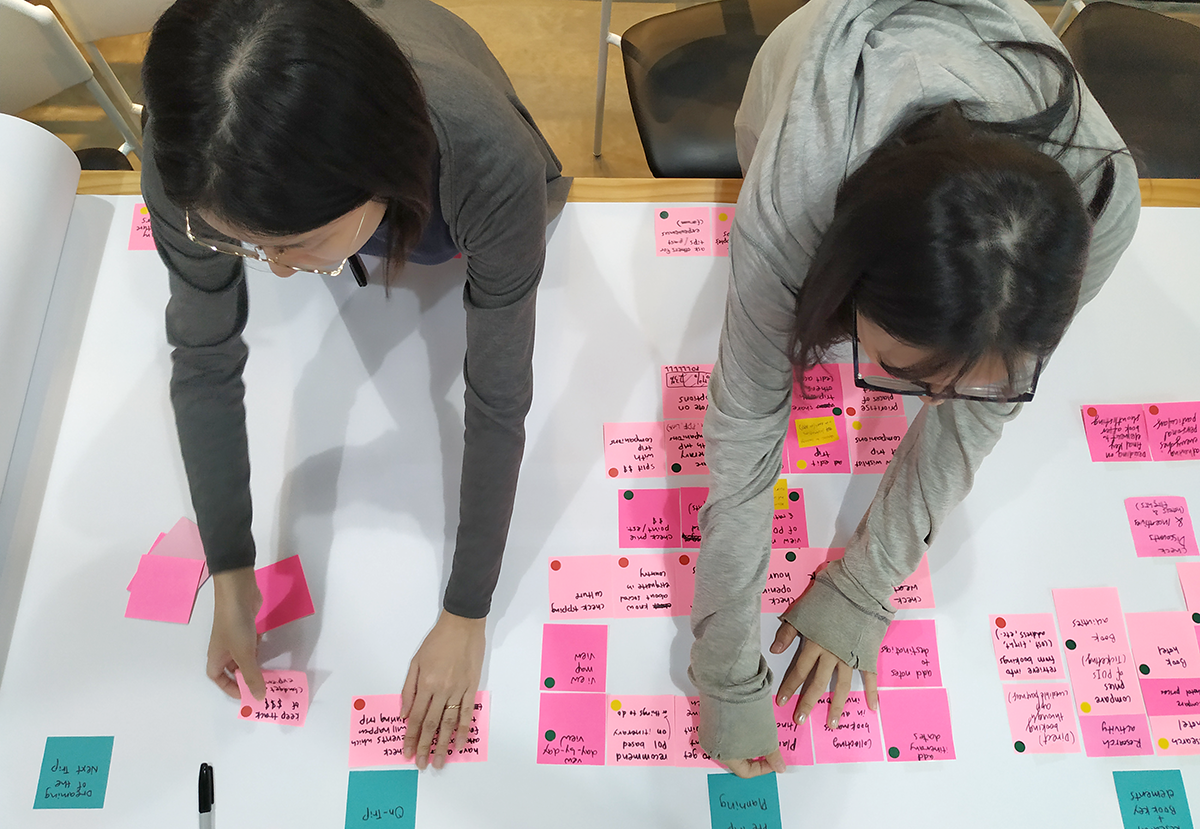
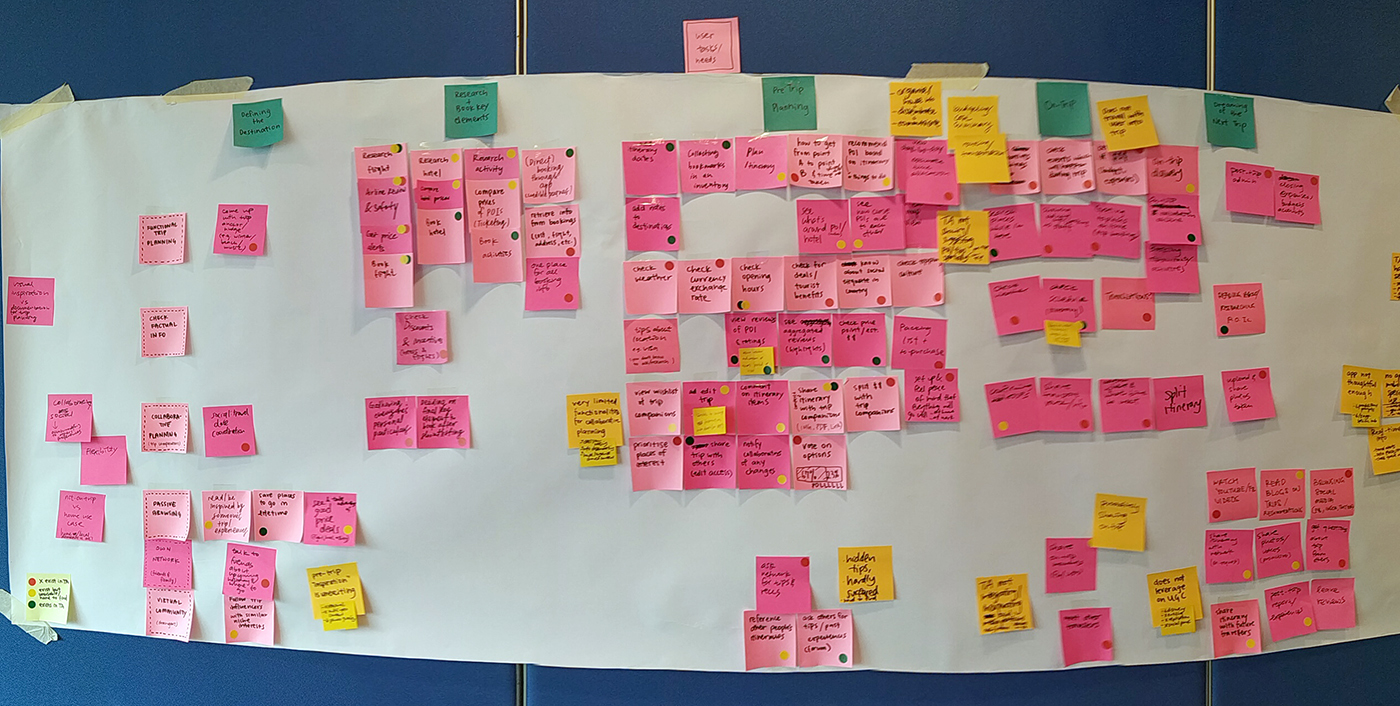
We had a download session where we were briefed in on prior research that was conducted for other markets. Crunching those findings, we plotted user tasks along the travel journey, and rated the client's performance in achieving all those tasks.
A workshop was conducted to identity main opportunity areas and developed HowMightWe statements together. Heatmap voting was used to decide on the focus areas to tackle on the sprint.
02
Ideation & Research
Map+Sketch ideation was conducted to bring several ideas to the table. Similar ideas were grouped and key screens were identified and sketched out, concluding in a low-fi prototype on paper. This was then transformed into a working prototype on figma.
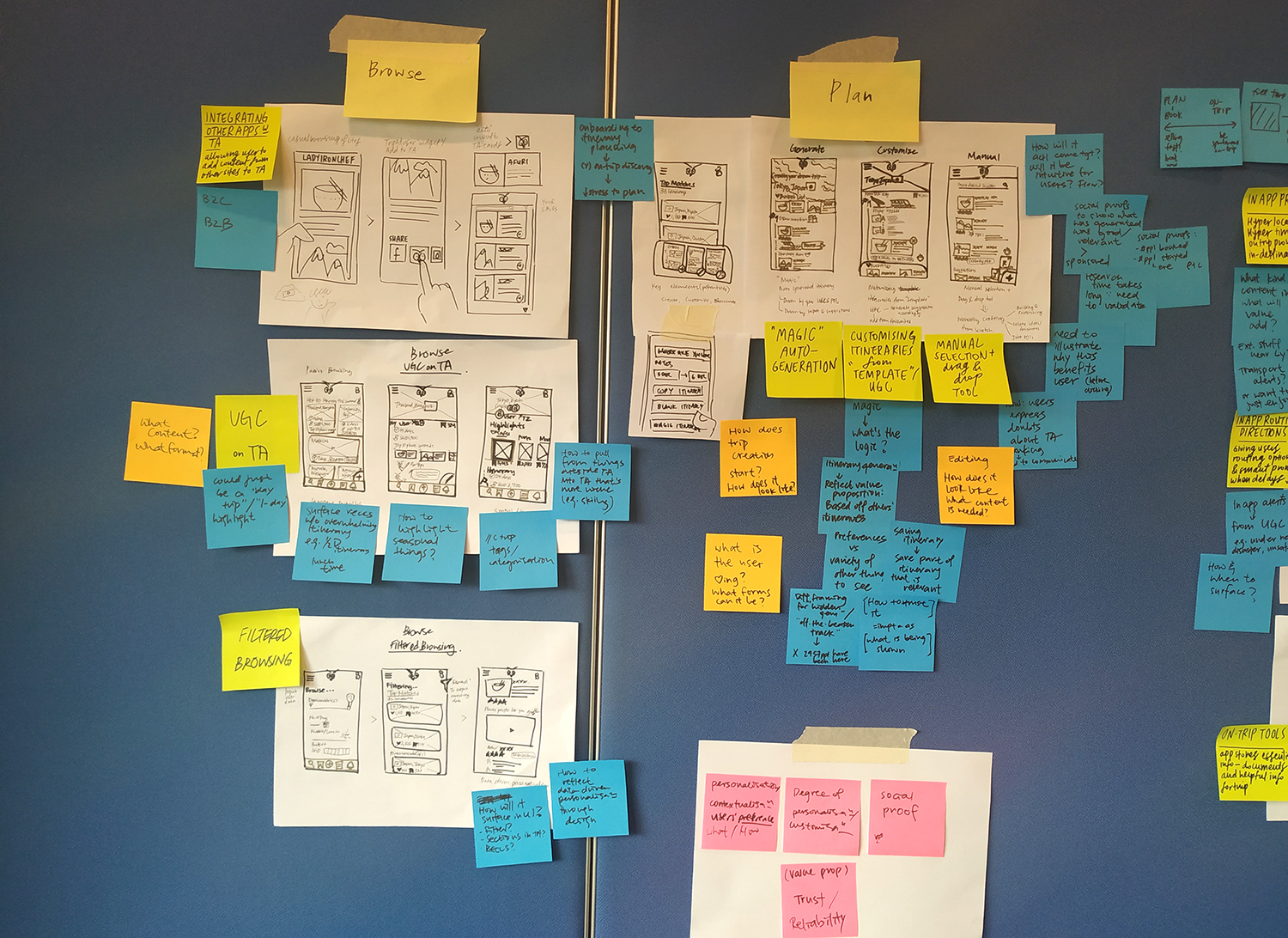
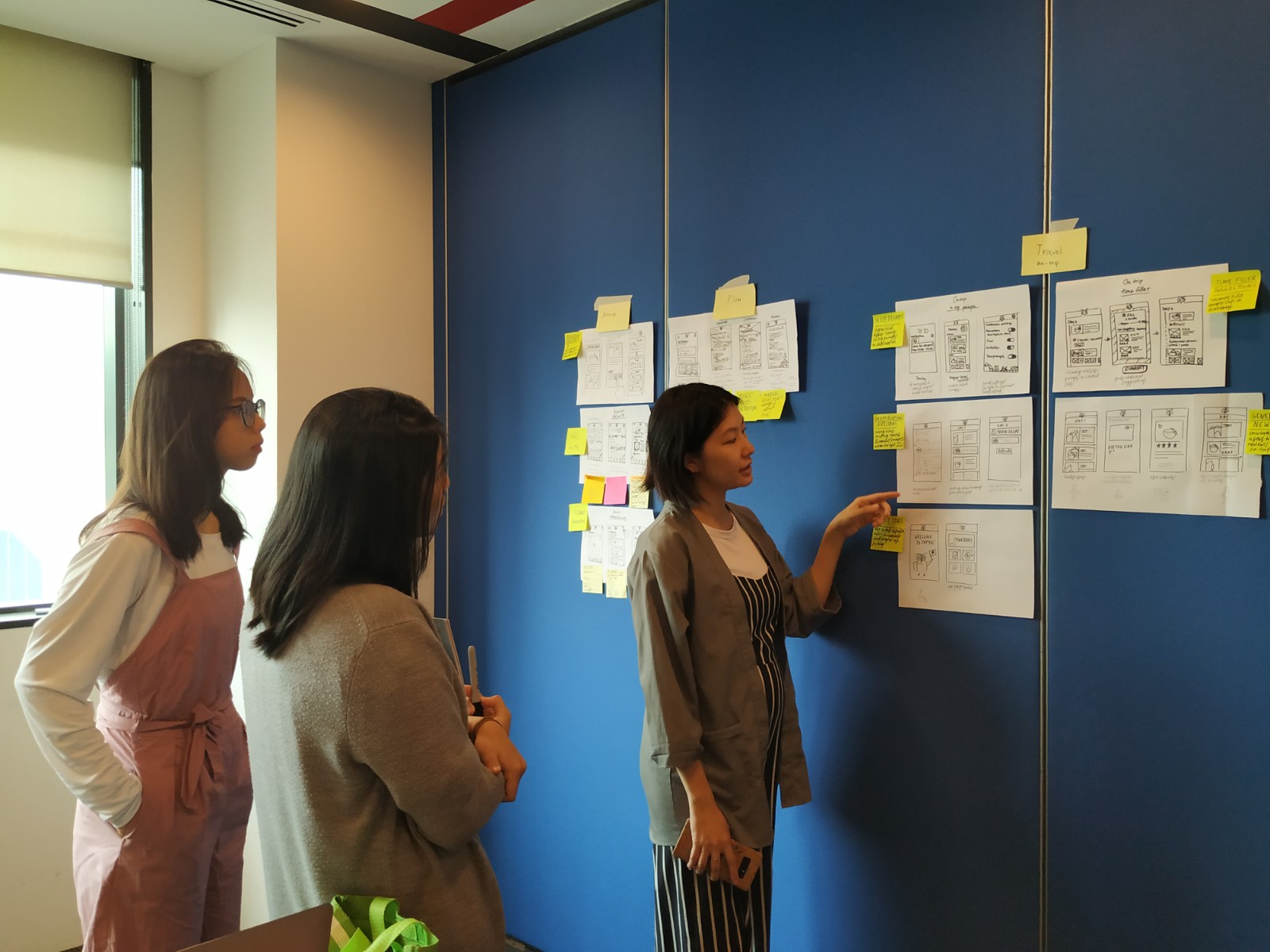
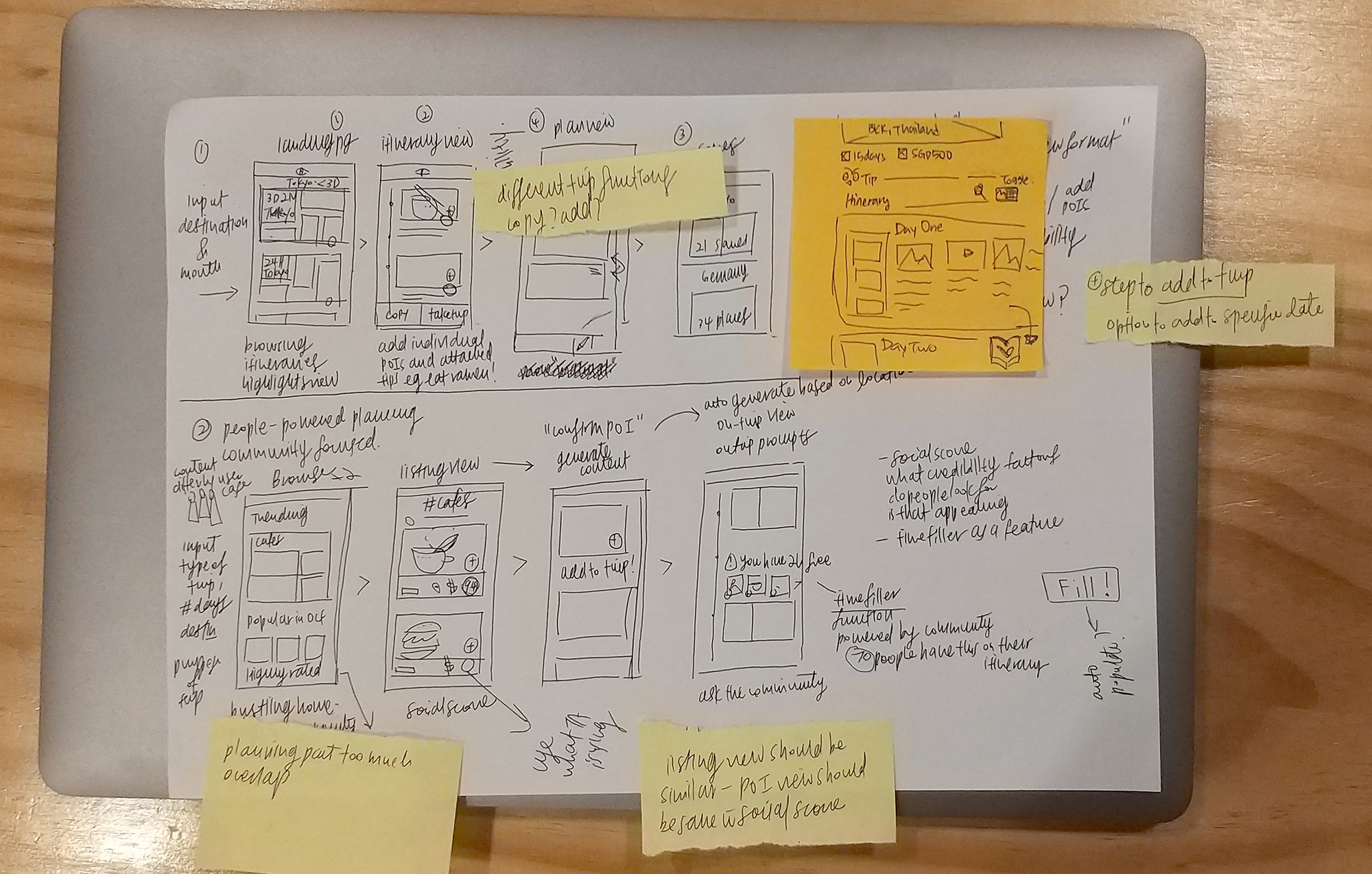
LO-FI PROTOTYPE FOCUSING ON BROWSE AND ITINERARY VIEW
04
User Testing
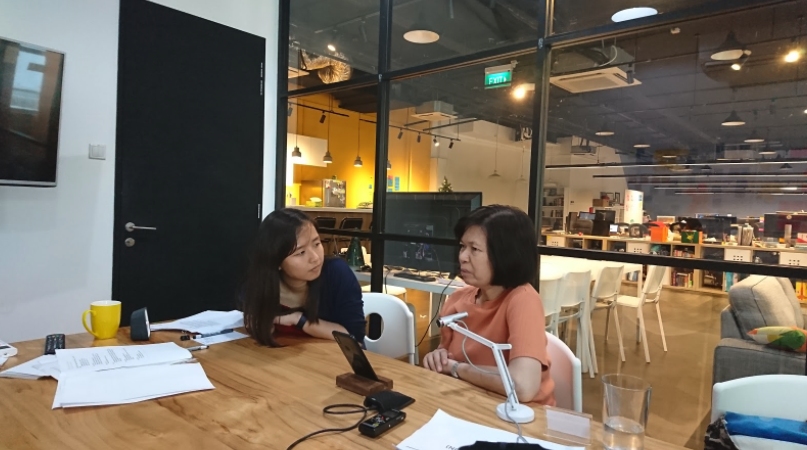
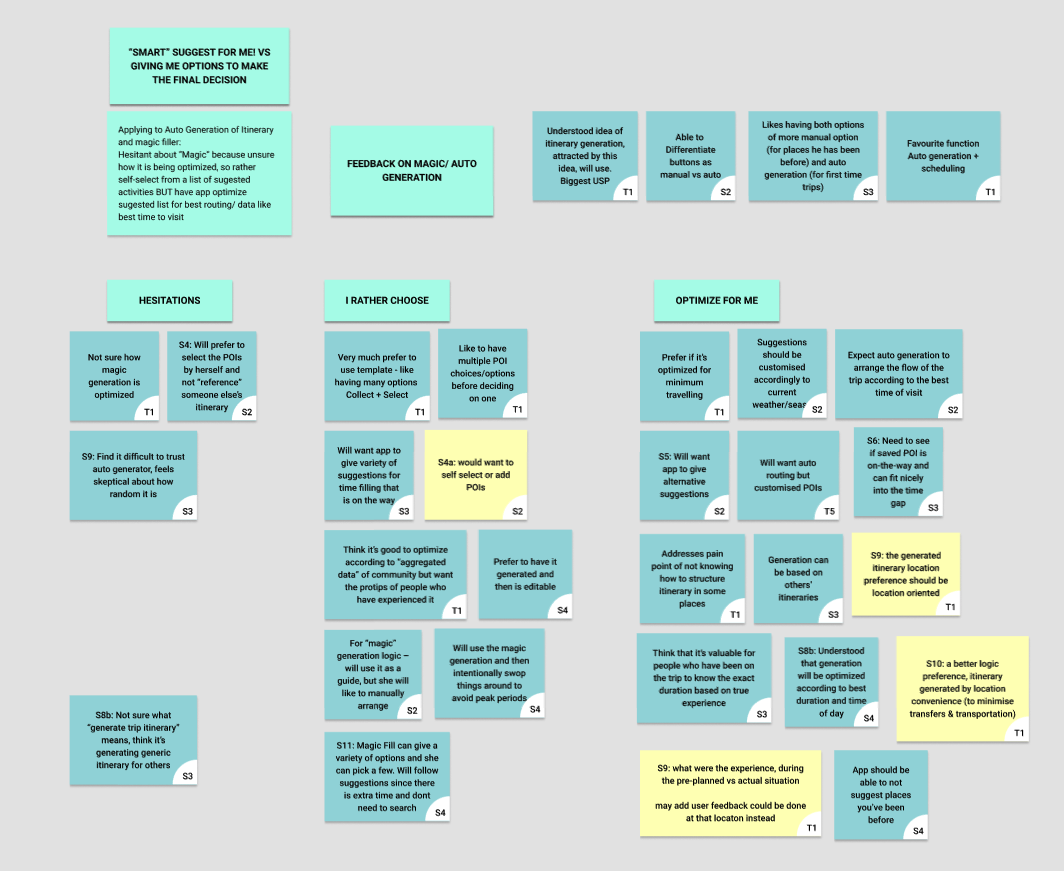
A first round of user testing was conducted with 5 users of varied nationalities and ages. A majority enjoyed the different itinerary views, evident in their immediate positive responses to the prototype. A key feedback was regarding the level of customisation after generating the itinerary.
Improving the Prototype
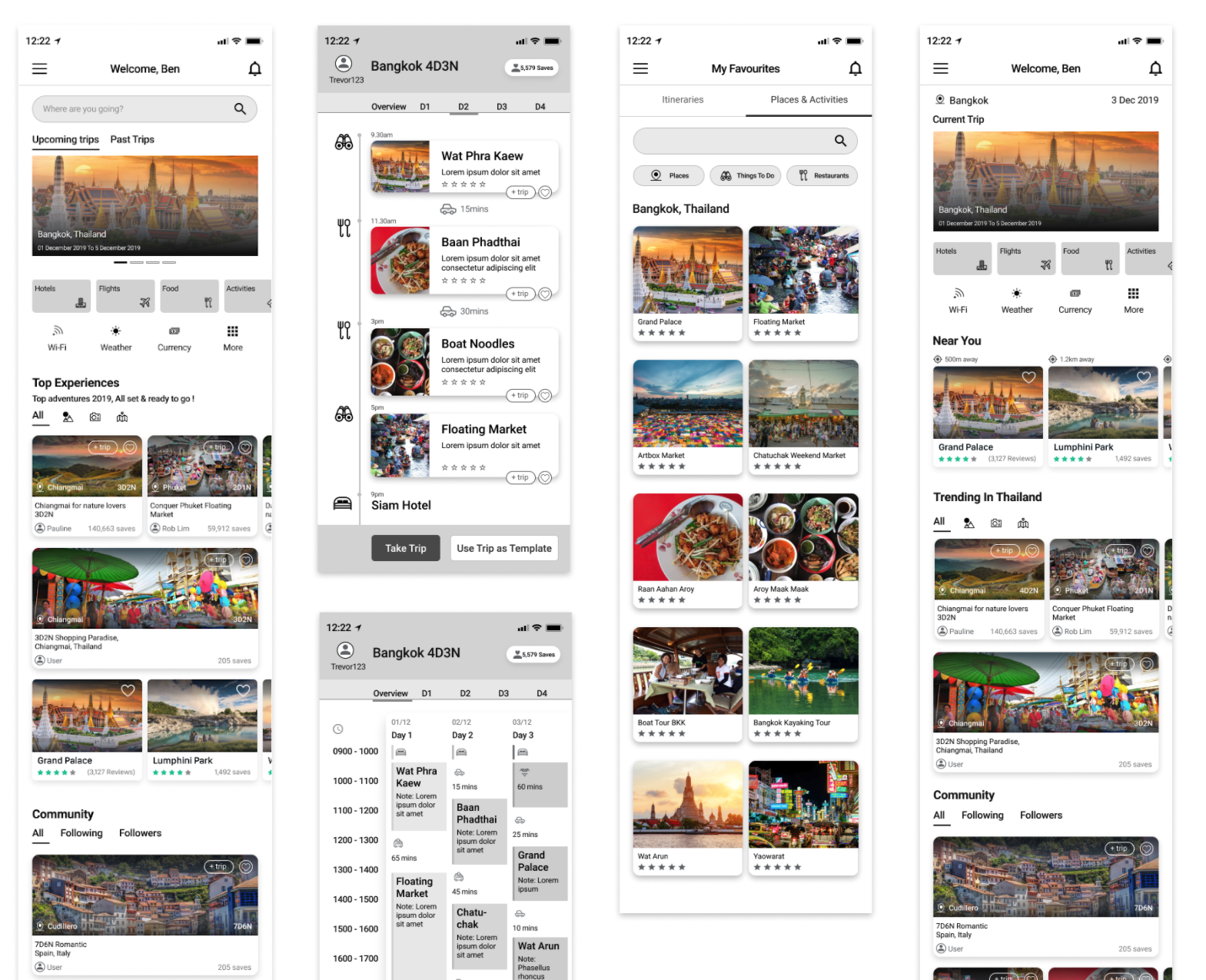
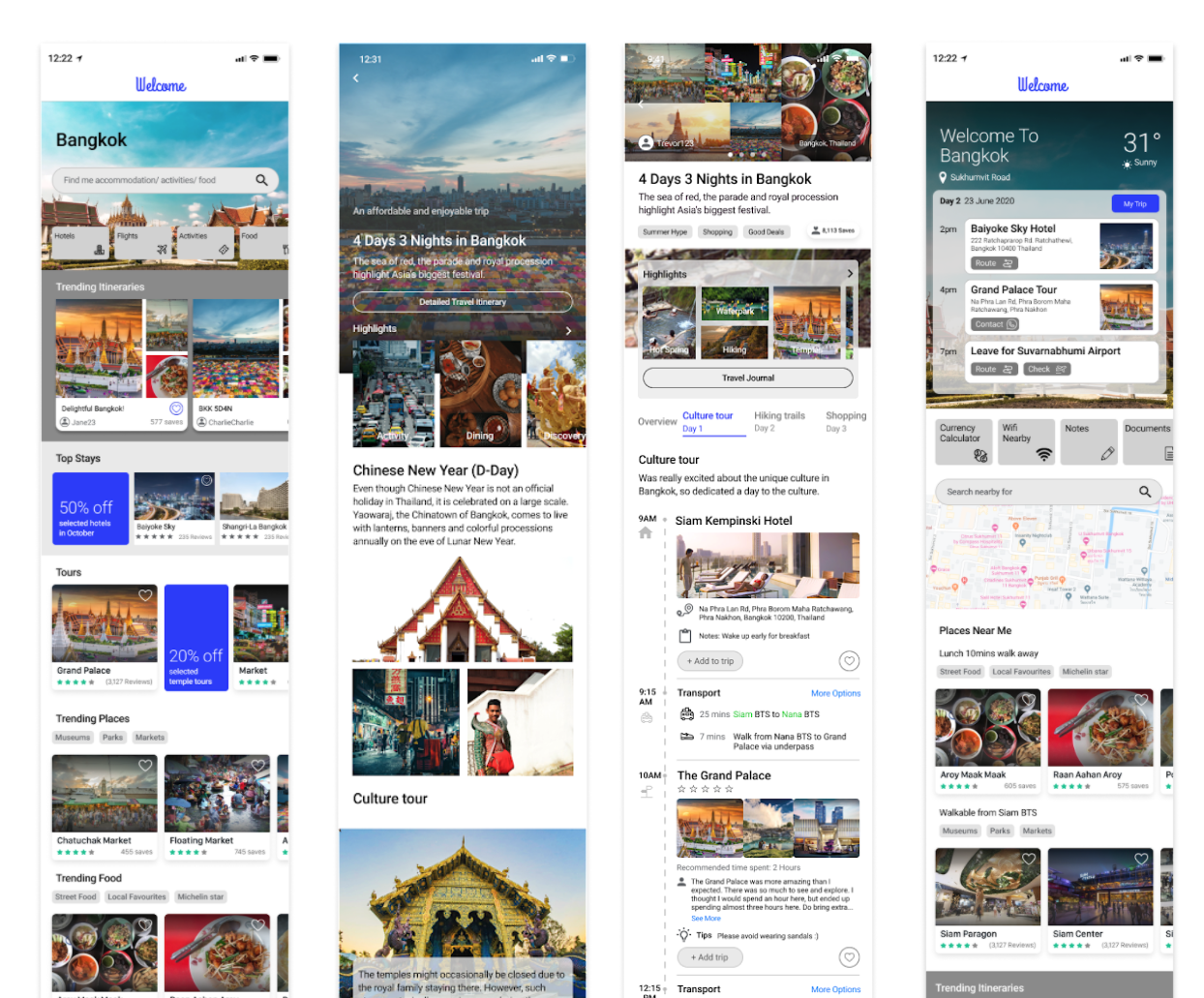
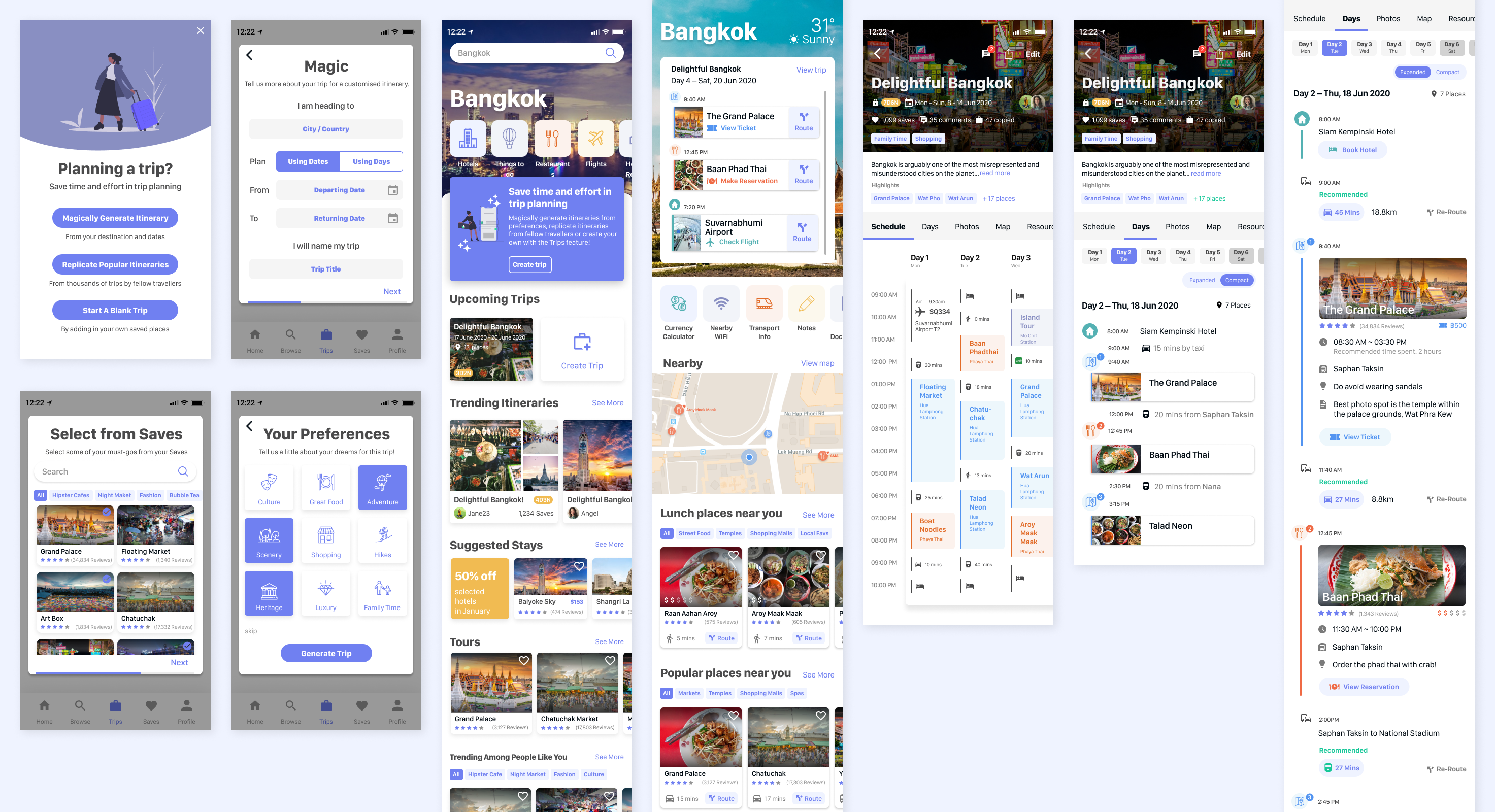
After the feedback from the first round of user testing, we made changes to the prototype, improving on the content organisation, flexibility of customising the itinerary, as well as an on-trip homepage. We also added more social features for testing.
High(er)-fi prototype focusing on the flexibility in customising the itinerary
04
User Testing
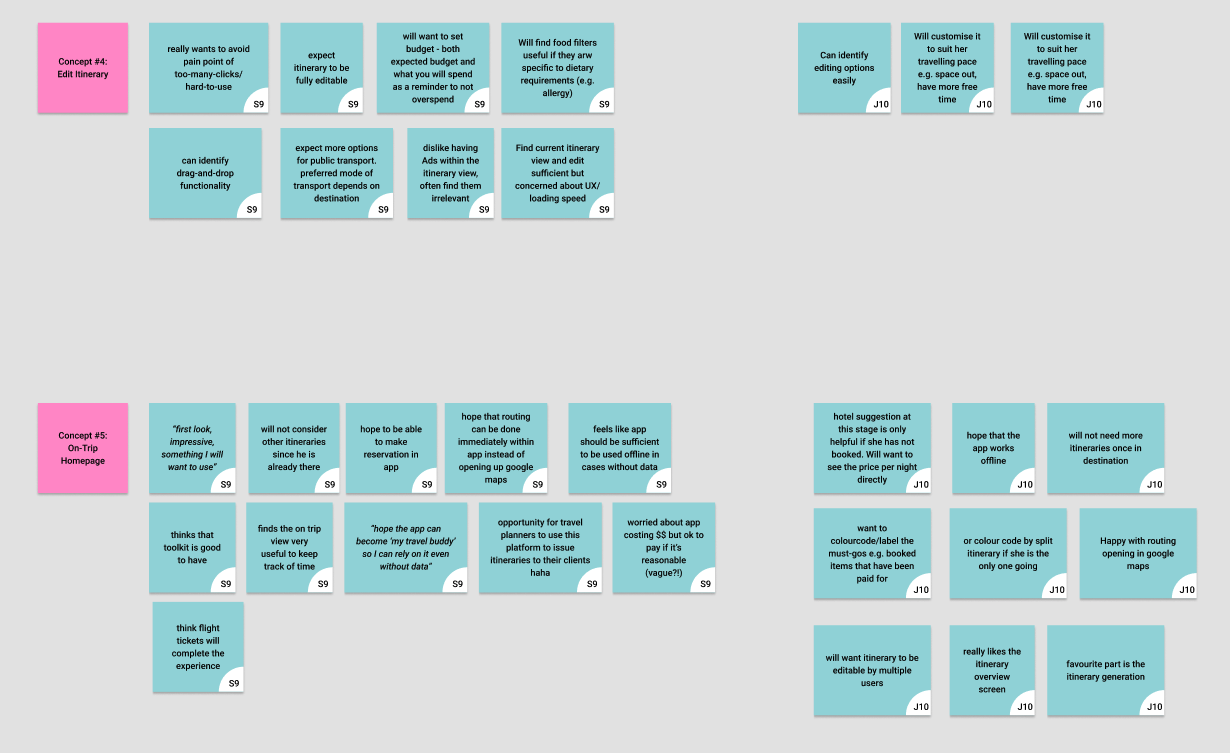
A second round of testing was conducted.
Final Prototype
This final prototype, alongside a Sprint report detailing the process and test tesults analysis were delivered at the end of the project.
Outcome
"Wa, when is this available?? I want to use it immediately".
– Quote by one of the user research participants
Goals fulfilment
The client was able to present a compelling product for consideration. The outcome is that they moved forward to make this idea part of their new offerings since.
Learnings
Sprinting too slowly?
Towards the end of the project, we realised that the client had a clear idea of product features. Going straight into wireframing and optimising the prototype for testing those features might have yielded more detailed insights than embarking on the design sprint with a more exploratory approach.
Could have been
Looking back at this project 6 years later with many new travel tools with AI, it makes me feel that it was a wasted opportunity at that point in time. I found that the insights we gathered from the users still held true, and the feature suggestions are now seen in new apps.