2019
Concept Testing
Validating a new product direction for a major travel tech company through a design sprint
CLIENT
Travel tech company (undisclosed due to NDA)
SCOPE
Product strategy, Product design, User testing & analysis
ROLE
UX Designer led design and facilitation
Team effort achieved at Minitheory
Overview

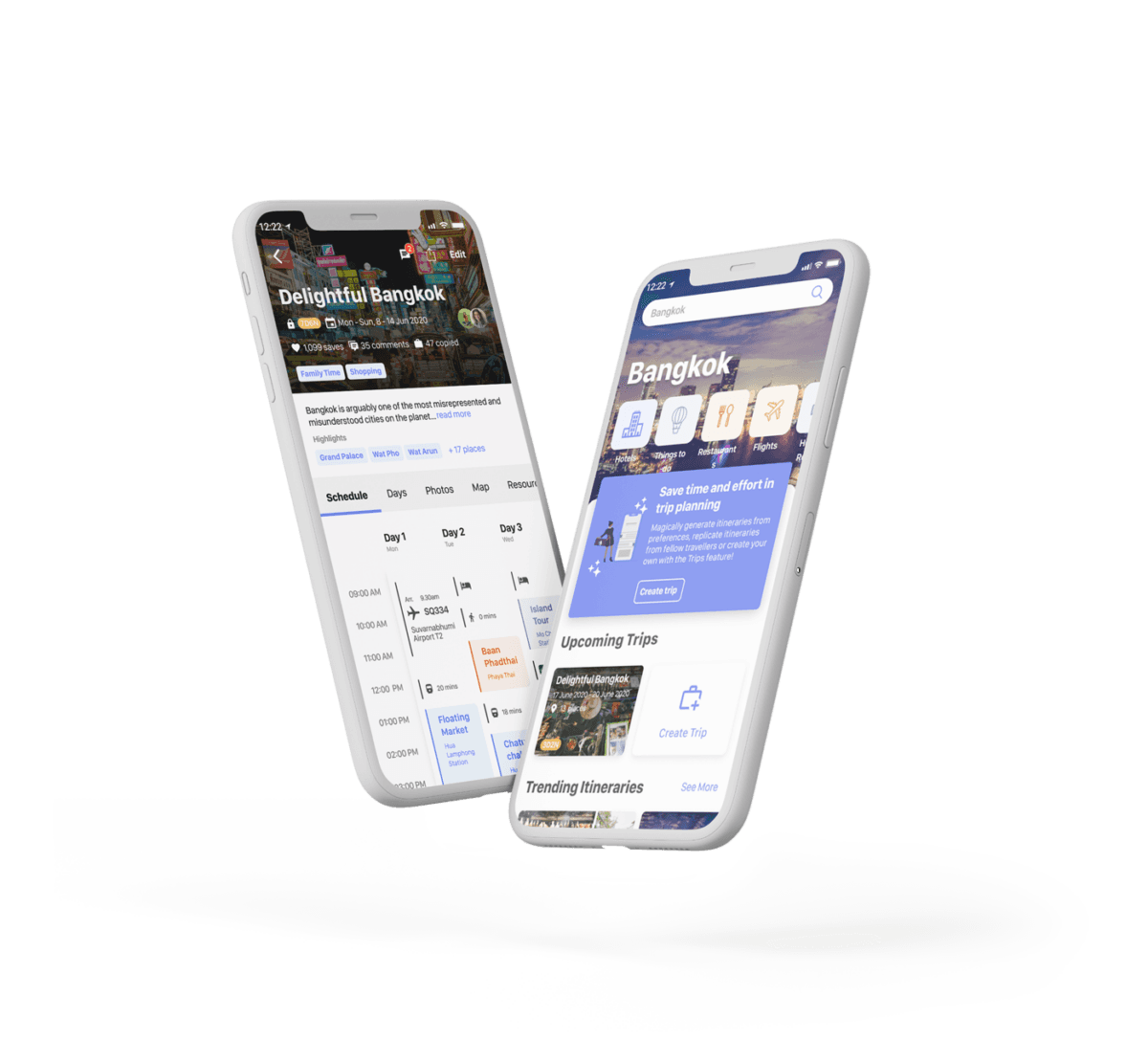
Facing increasing pressure to stay relevant, a travel company with decades of recommendation data needed to evolve its offering. Its extensive database presented an opportunity to become an interactive itinerary planning experience. Our team was tasked with designing and prototyping a mobile app to validate this new direction through user testing. The question guiding our work was:
How might we make itinerary planning intuitive and efficient by leveraging the client's rich existing data?
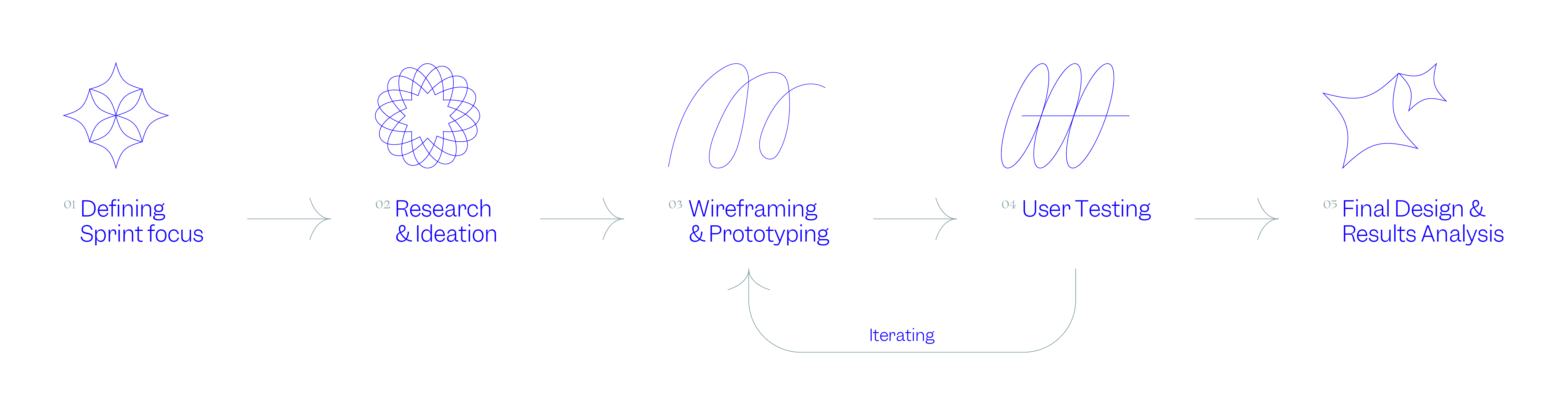
Sprint-based Approach
We proposed a design sprint since it promotes quick iterations, allowing us to bring multiple concepts for testing in a short period of time.
Sprint Flow
01
Deciding on the Sprint Focus
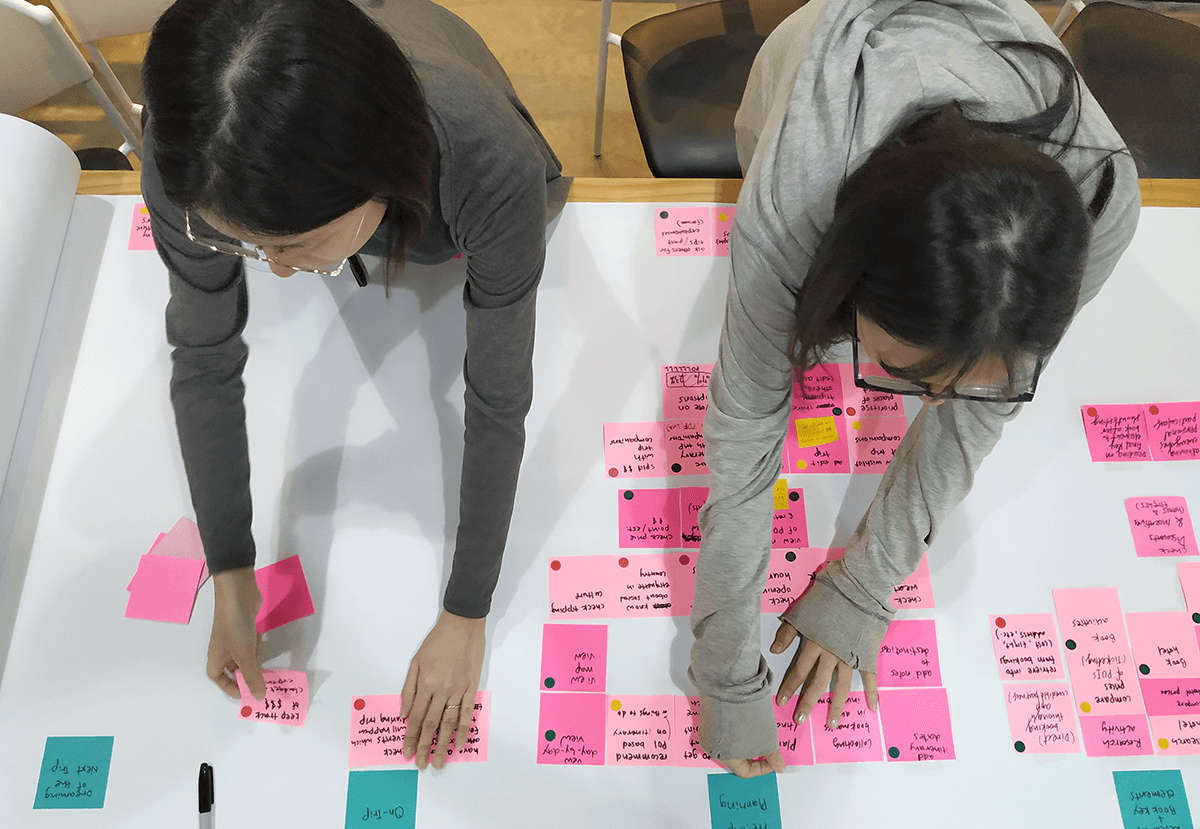
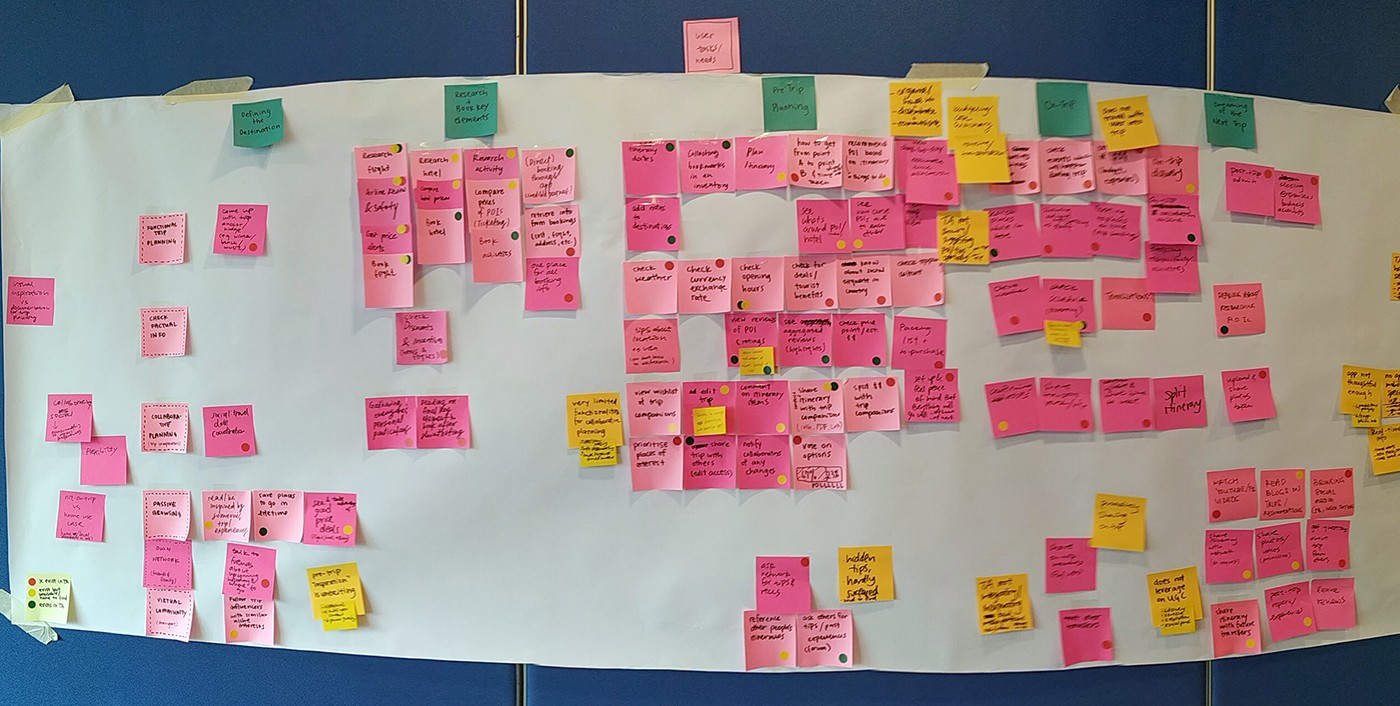
We began with a research download session, reviewing insights gathered from prior studies conducted across other markets. Synthesising those findings, we mapped key user tasks across the end-to-end travel journey and accessed the product's performance in each stage.
Through a facilitated workshop, we identified opportunity areas and translated them into focused How Might We statements. Using heatmap voting, the team aligned on the highest-impact themes to prioritise for this sprint.
02
Ideation & Research
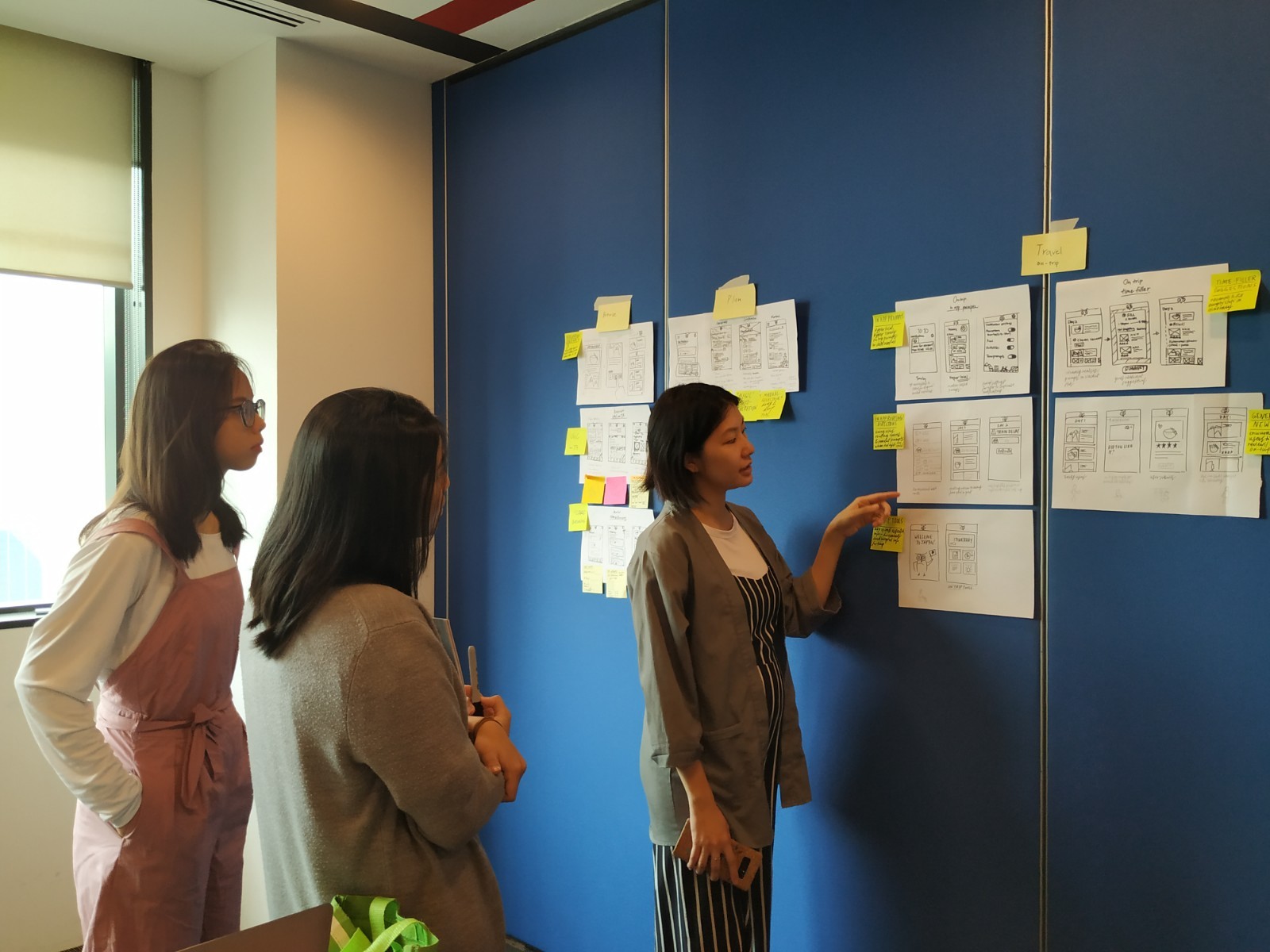
We ran a Map+Sketch exercise to quickly explore multiple solution directions. Similar ideas were grouped, key screens were identified and sketched out. This concluded in a low-fidelity paper prototype that is then translated into an interactive Figma prototype for user testing.
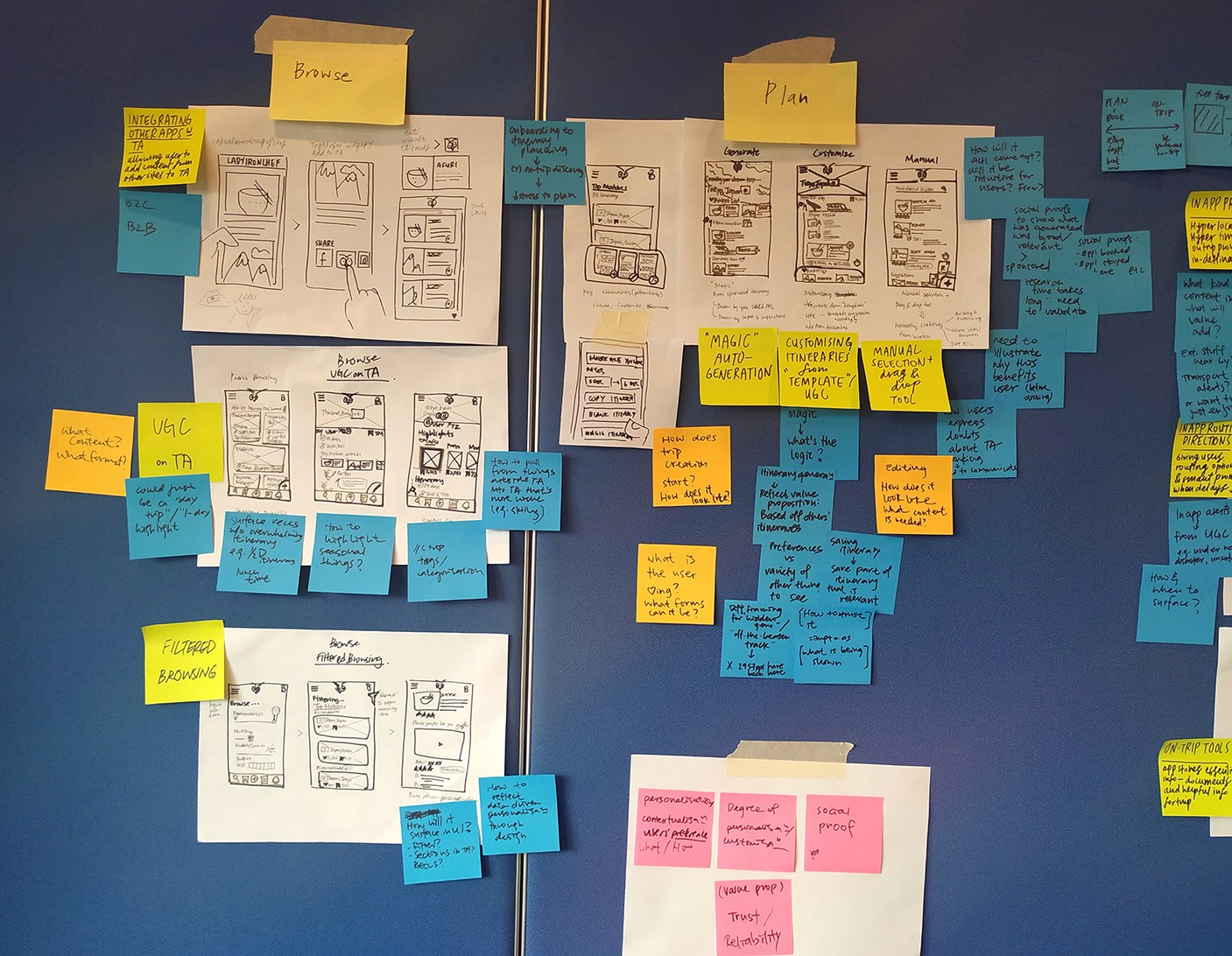
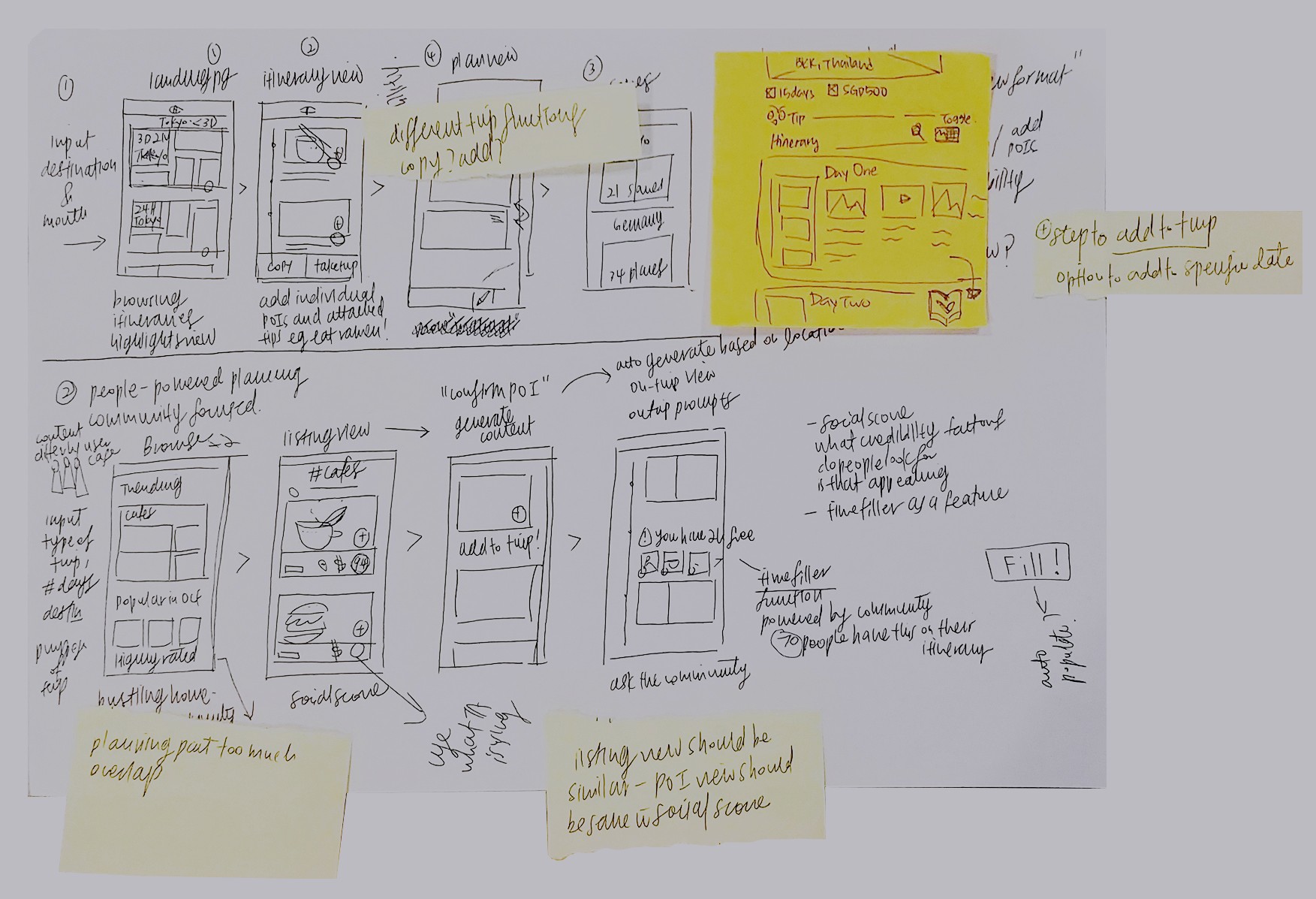
LO-FI PROTOTYPE FOCUSING ON BROWSE & ITINERARY VIEW
03
User Testing – Round 1
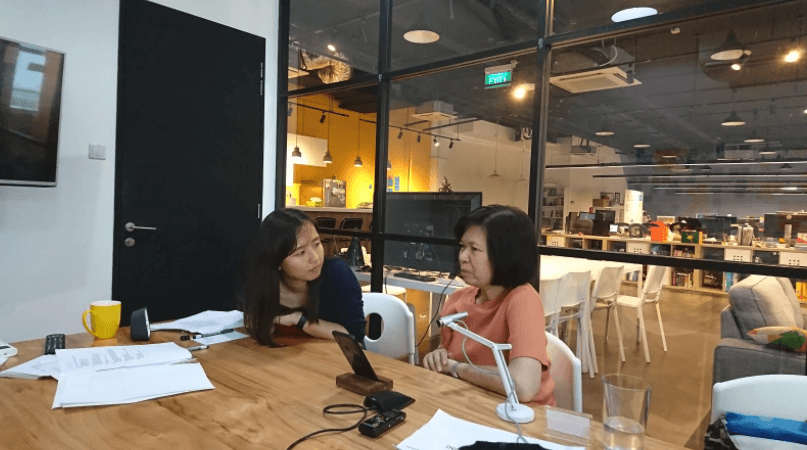
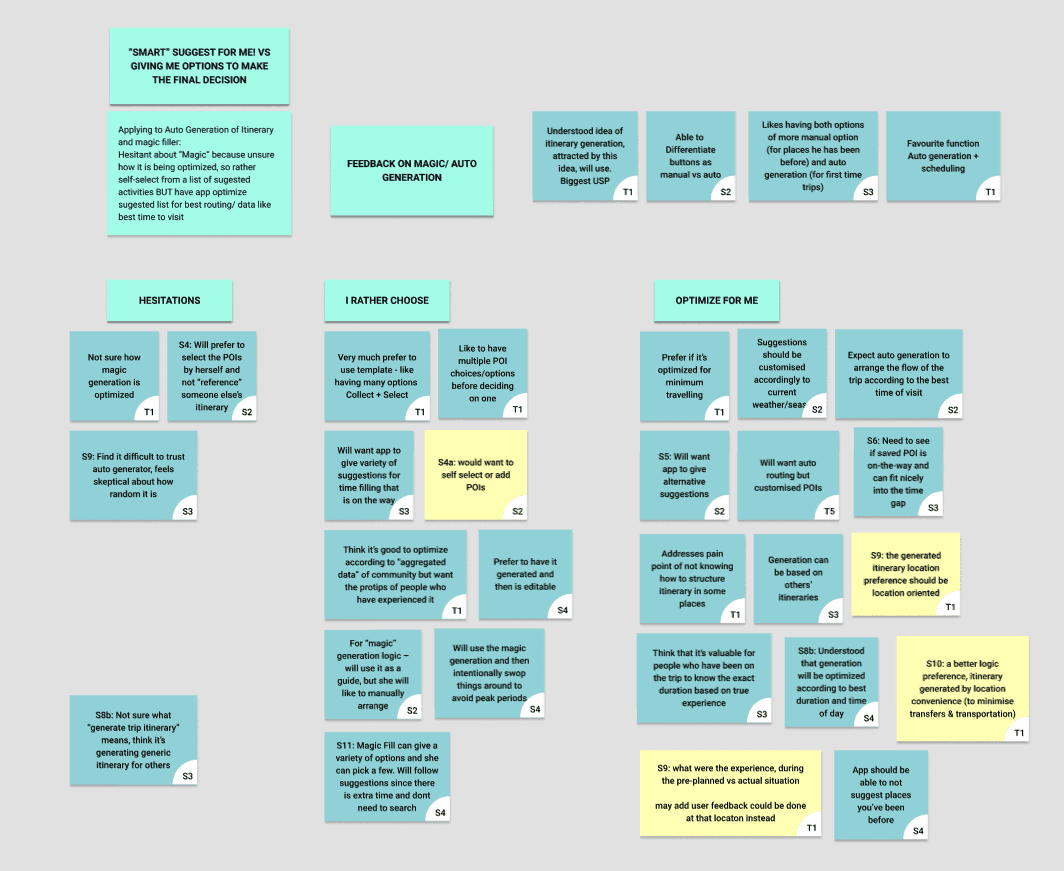
A first round of user testing was conducted with five participants across varied ages and nationalities. Participants responded positively to the different itinerary views, validating the core concept. Feedback also revealed a desire for greater flexibility and customisation after an itinerary was generated.
04
Improving the Prototype
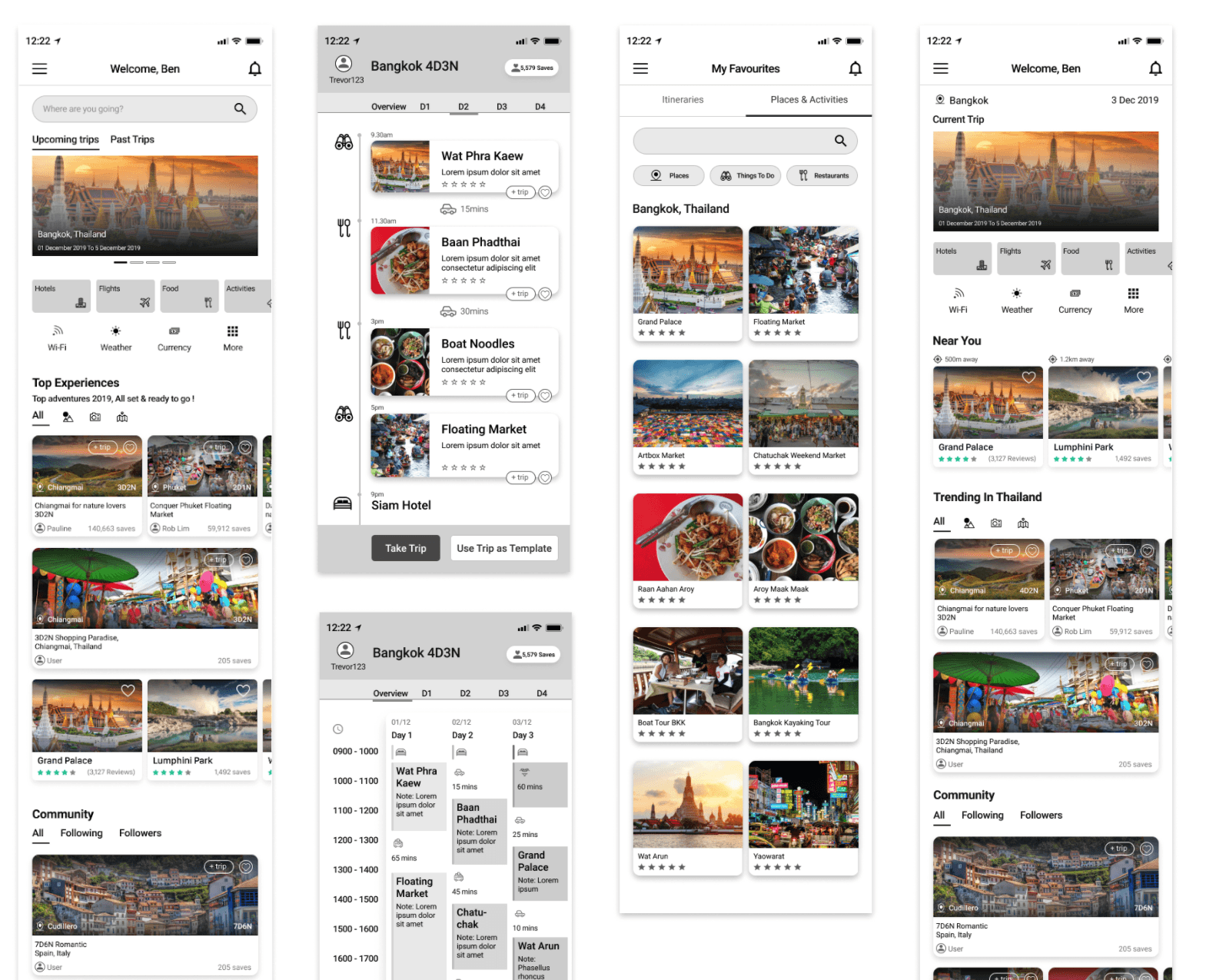
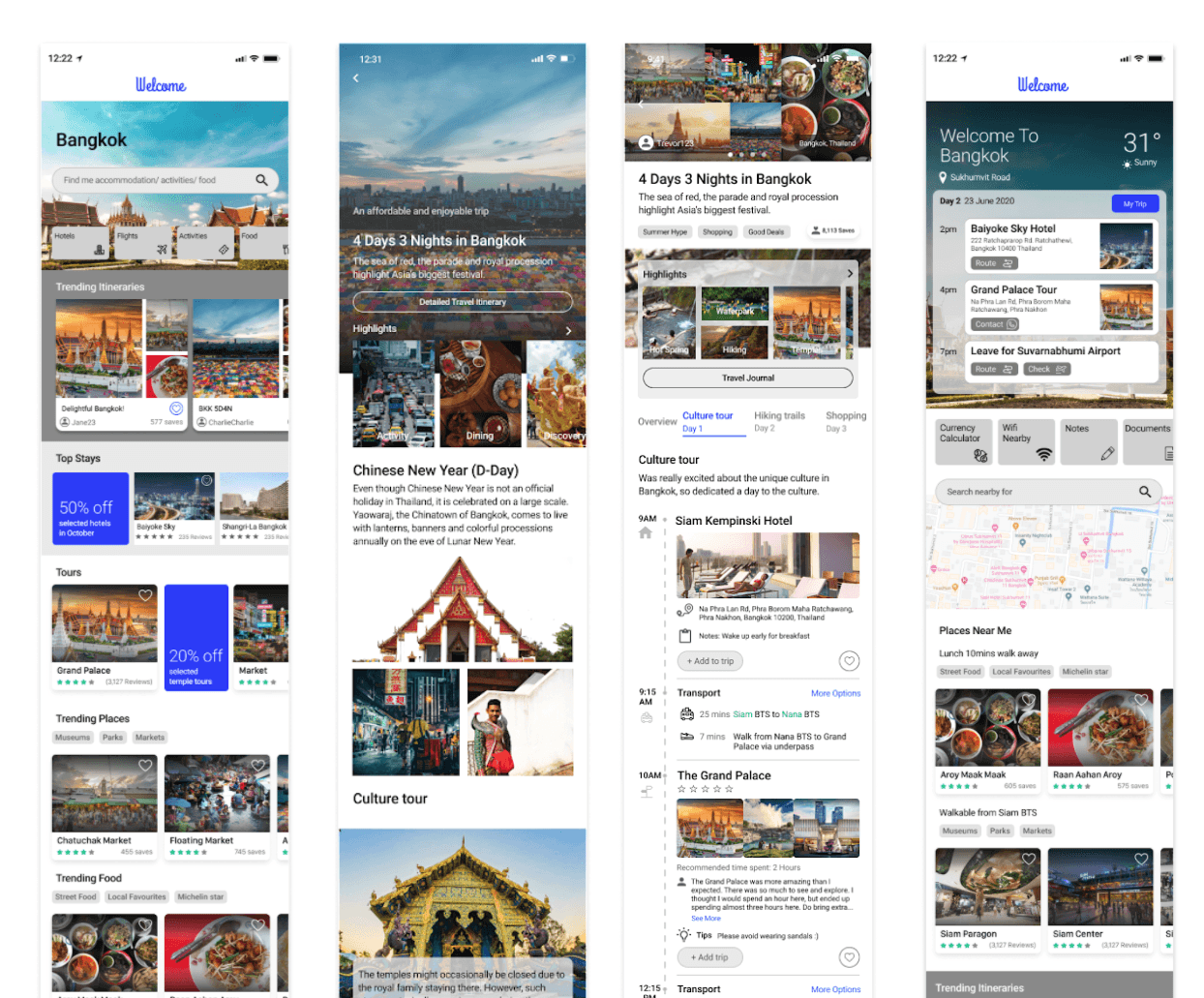
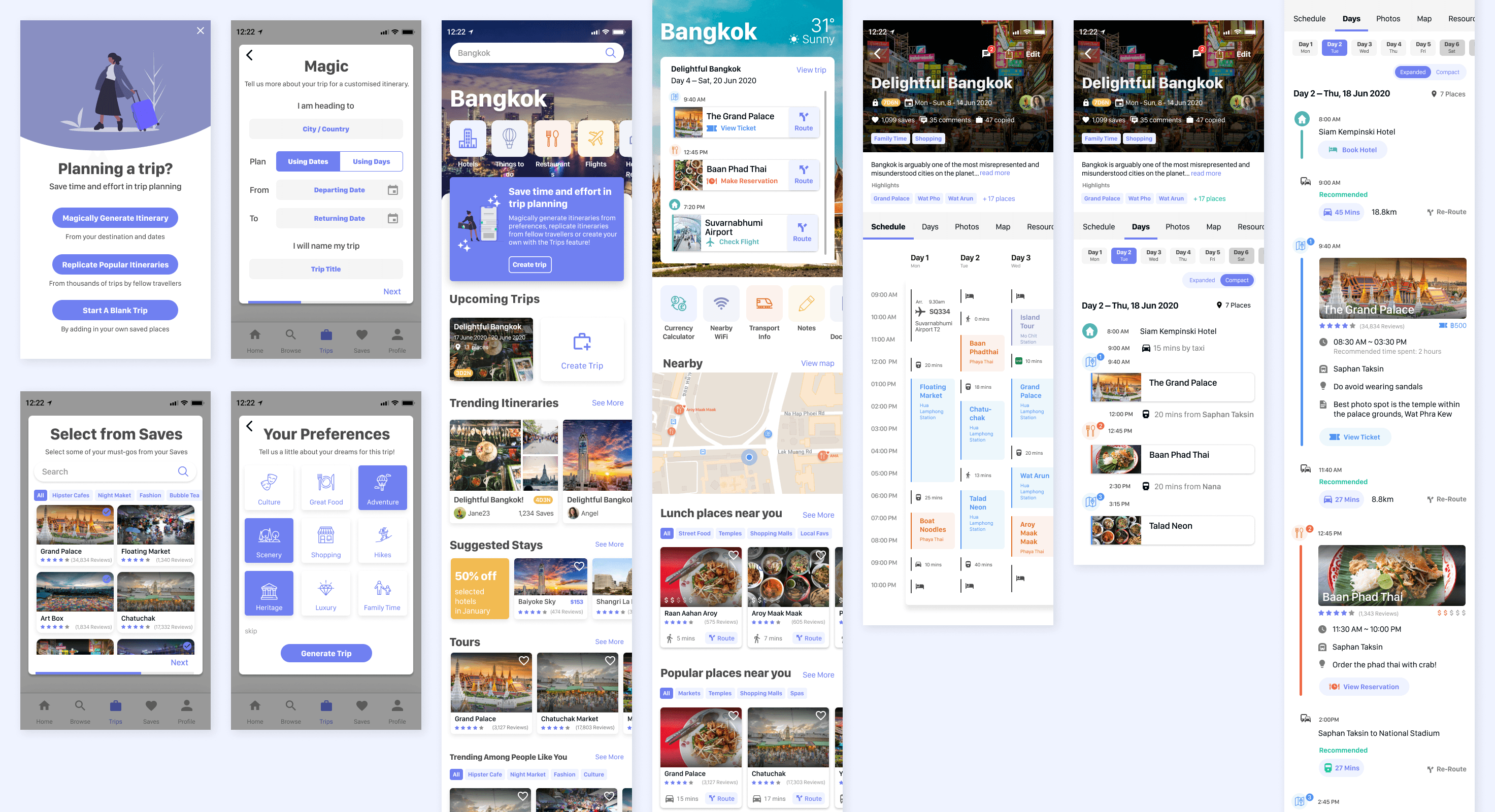
Based on insights from the first round of user testing, we refined the prototype to improve content organisation and increase flexibility in itinerary customisation. We also introduced a dedicated on-trip homepage to better support users while on their trip, and explored additional social features for testing.
HIGH(ER) PROTOTYPE FOCUSING ON THE FLEXIBILITY IN CUSTOMISING THE ITINERARY
FINAL PROTOTYPE
Outcome
"Wa, when is this available?? I want to use it immediately".
– Quote by one of the user research participants
Impact
The client was able to present a compelling product idea for consideration. They eventually moved forward to make this idea part of their new offerings.
Learnings
Sprinting on another lane
Midway through the sprint, we realised that the client already had a strong point of view on the desired feature set. In hindsight, aligning earlier on those constraints might have allowed us to focus our efforts on validating and refining specific interaction models, rather than investing time on a more exploratory approach. This taught me the importance of calibrating level of exploration to stakeholder clarity to ensure sprint approach matches both business readiness and research goals.
Seeing ideas mature over time
Revisiting this project six years later, it's striking how many of the tested concepts (flexible itinerary views, customisation controls, on trip mode) have become standard in many travel apps, especially with the rise of AI-assisted planning. While this product did not launch in a timely manner, the user insights have proven durable. It is a reminder that strong user needs outlast trends and good research precedes the market.