2025 – 2026
Product
Integrating AI assistance into PropTech platform to enhance and streamline complex workflows
CLIENT
Podium, PropTech SaaS platform
SCOPE
0→1 Feature, Product Strategy, Design, Delivery
ROLE
Sole Product Designer, working with
Product Manager and Developer
Overview

Unsplash: Cash Macanaya
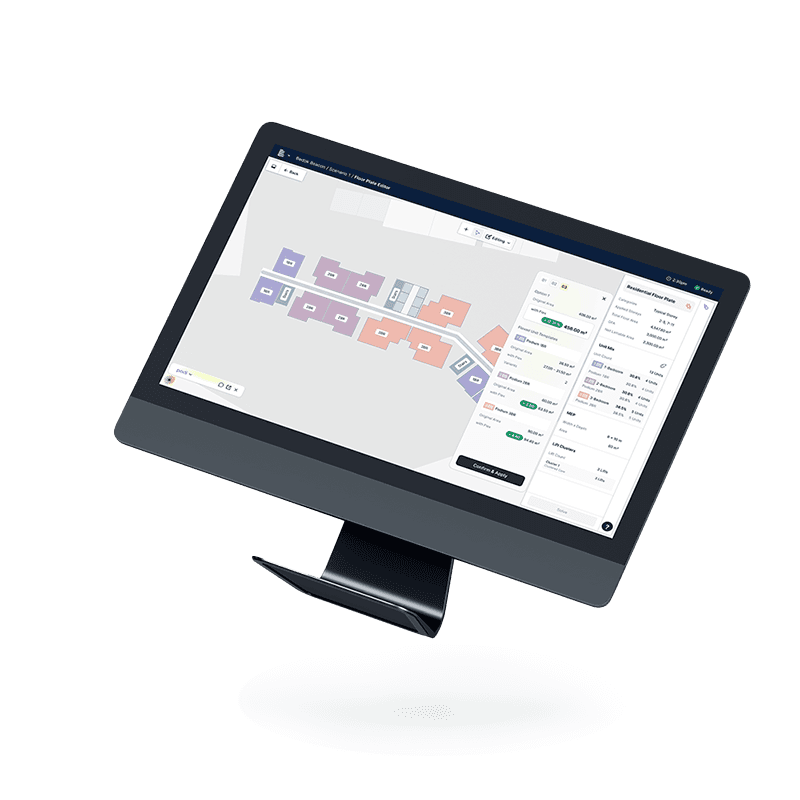
Podium is a design automation platform powered by computational solvers that generate building designs, from site massing down to structural detail. As the platform grew, so did the complexity of its workflows. Much of this computational power remained fragmented, difficult to access, and hence underutilised. Insights from user feedback revealed recurring pain points: • New users struggled to discover relevant capabilities • Power users encountered friction from long load times mid-workflow • Exploring options required repeated back-and-forth, breaking momentum Obvious fixes like onboarding flows and wizards could address discoverability, but not the deeper problems around non-linear workflows. This presented an opportunity to utilise AI to allow users to actively interrogate and iterate on the platform's computational intelligence within their workflows.
How might we integrate AI assistance into the product experience to supercharge existing workflows?
The Approach
AI in the UI
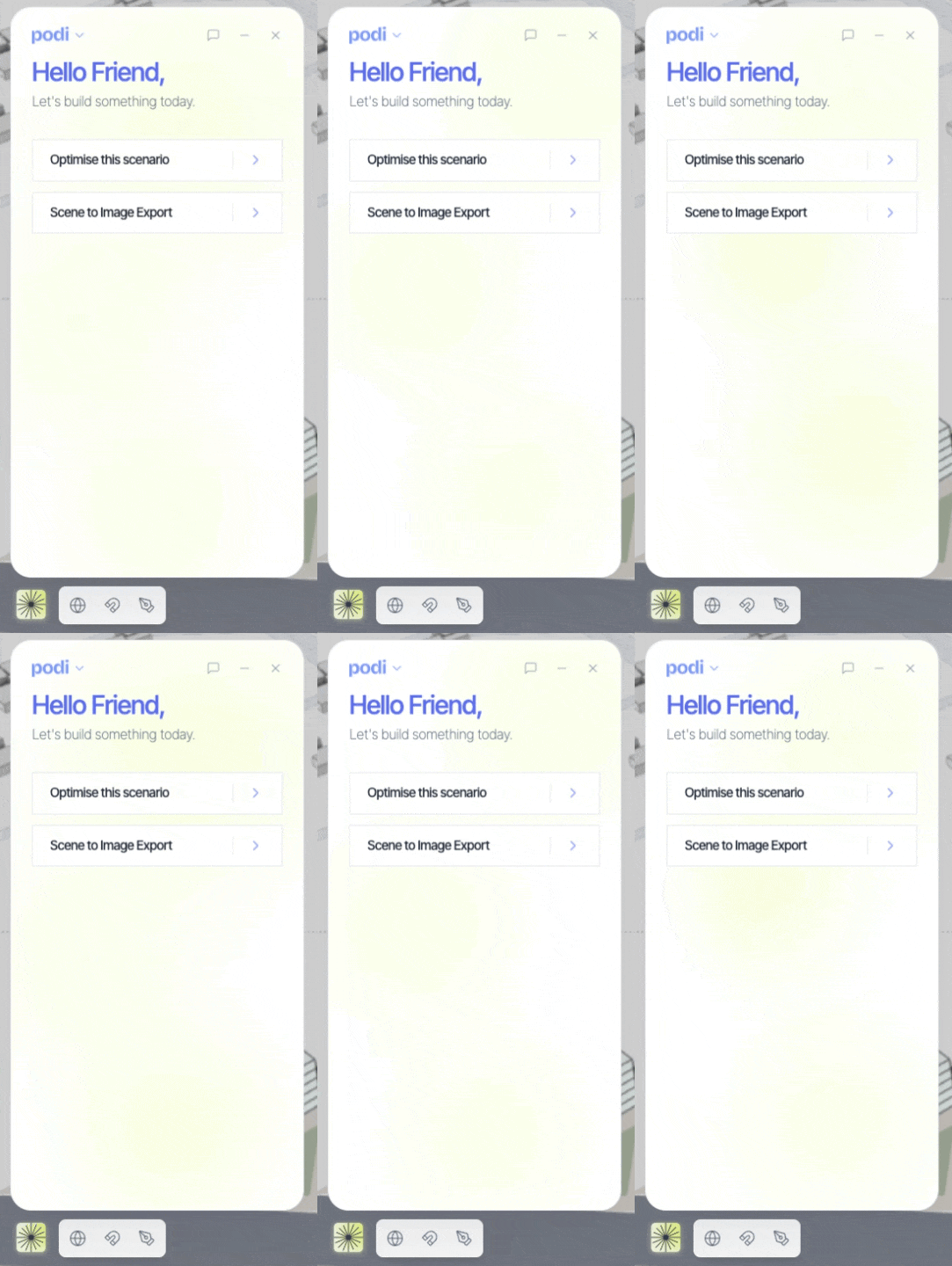
Meet Podi, Podium Intelligence.
An AI assistant embedded within Podium, designed to make computational intelligence accessible without disrupting workflows.
We chose a conversational interface because complex workflows are rarely linear. Wizards assume a known path, hints assume a known need and command palettes are too rigid for exploratory tasks.
Conversation allows users to express intent and iterate on outputs while Podi can surface relevant prompts based on context, allowing a two-way interaction. This AI pattern offers users a familiar mental model and lowers the barrier to adoption.
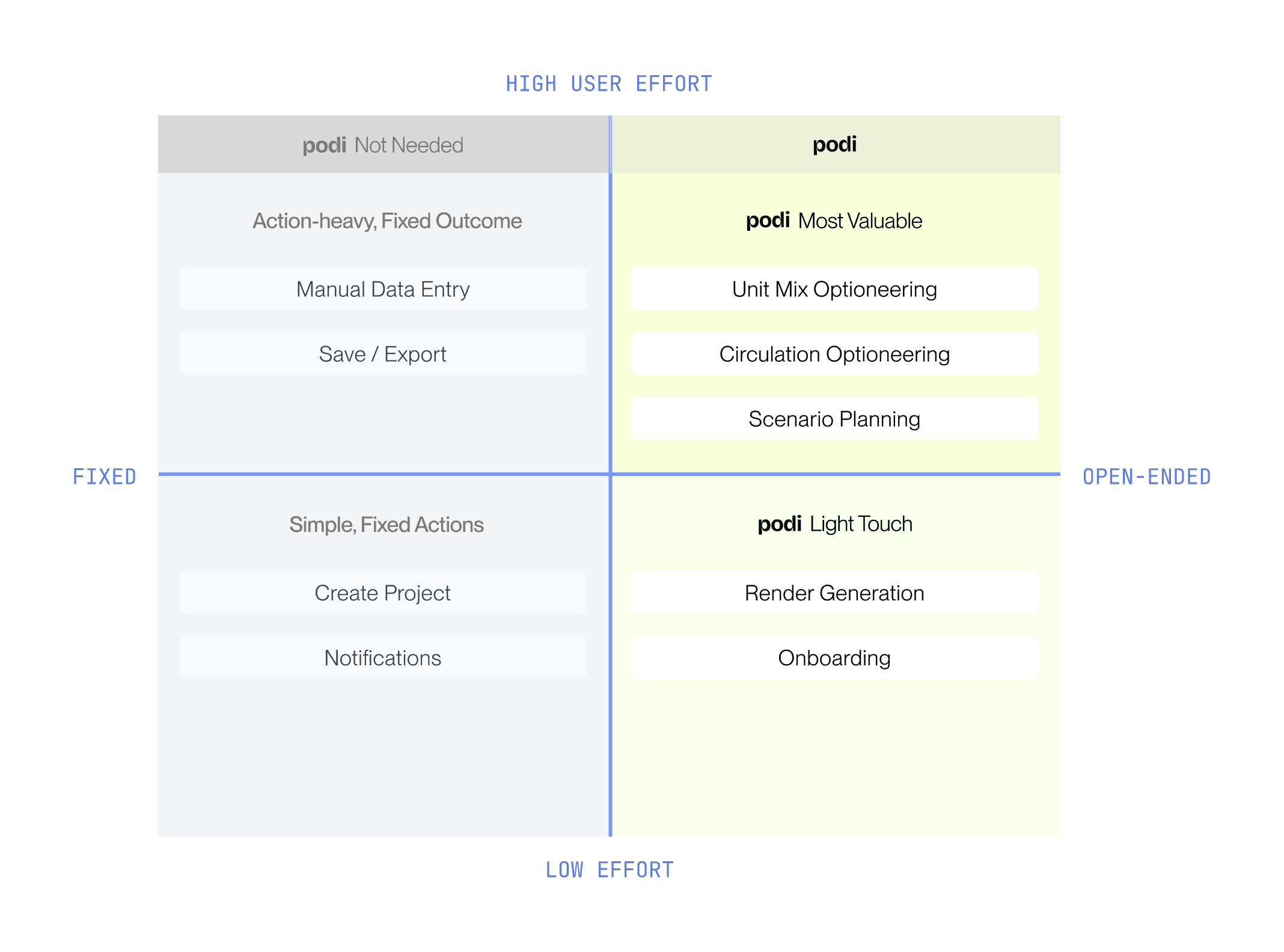
I defined a framework to determine when AI should be applied based on task characteristics.
For deterministic outcomes, existing UX patterns are more efficient.
For open-ended workflows with multiple valid outcomes, Podi becomes valuable to support iteration and decision-making.
These principles guided the AI integration, shaping key UX decisions and interaction patterns.
🫥 Surface guidance contextually
A useful assistant knows when to show up. Prompts and suggestions are triggered based on user context, ensuring guidance feels timely and relevant and not intrusive.
🌊 Enable fluid, non-linear workflows
The AI-powered flows are designed to support back-and-forth exploration, allowing user to move seamlessly between main canvas and assistant without breaking flow.
🕹️ Keep the user in control
Testing revealed low trust in fully automated actions. Instead of a "magic do-all button", the experience is designed to be collaborative, supporting co-creation between the user and AI.
Brand & Tonality
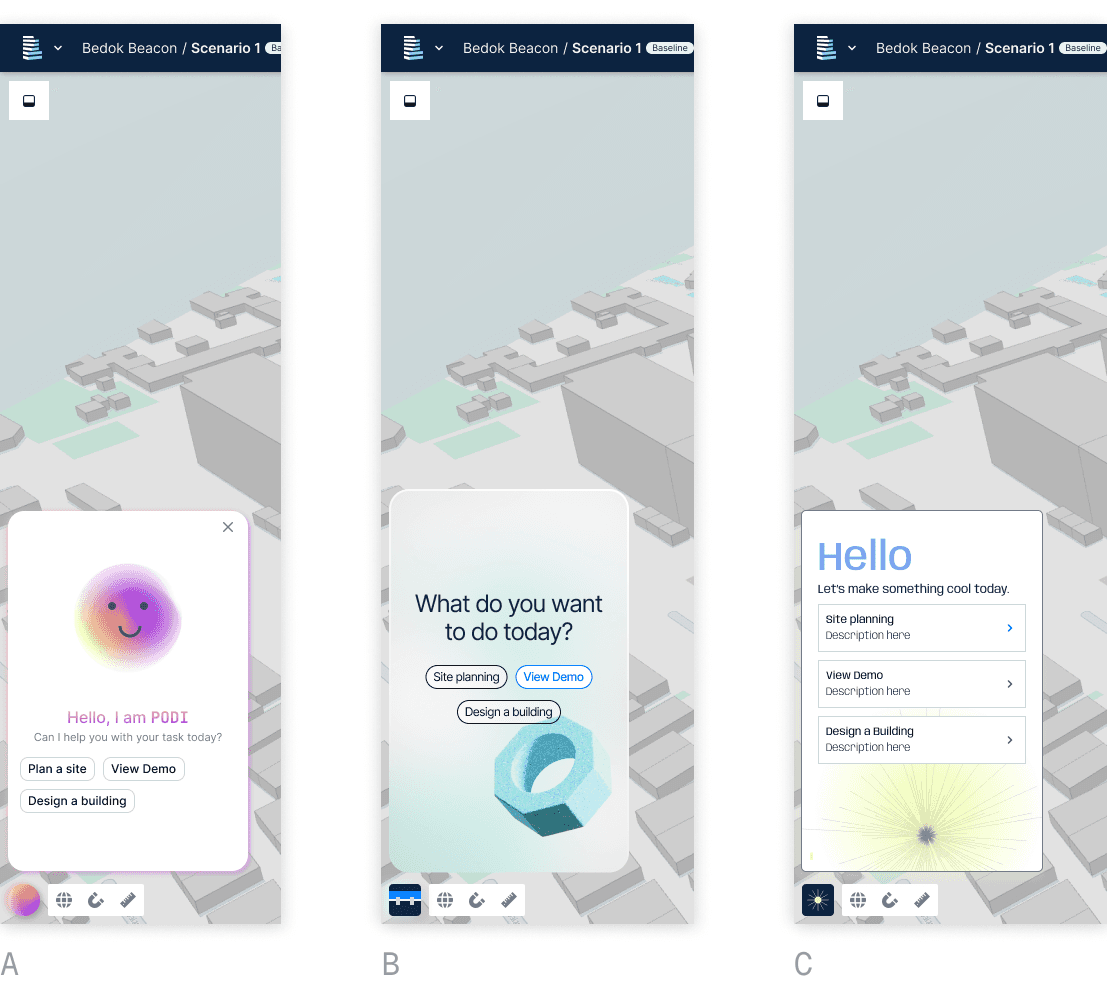
I defined Podi's personality early on to guide its tone and ensure it feels consistent across future patterns. I explored 3 tonal directions, ranging from friendly to more technical. We aligned on a more measured and intelligent option C – reflecting the structured, logic-driven nature of Podium's workflows.
Establishing Podi patterns
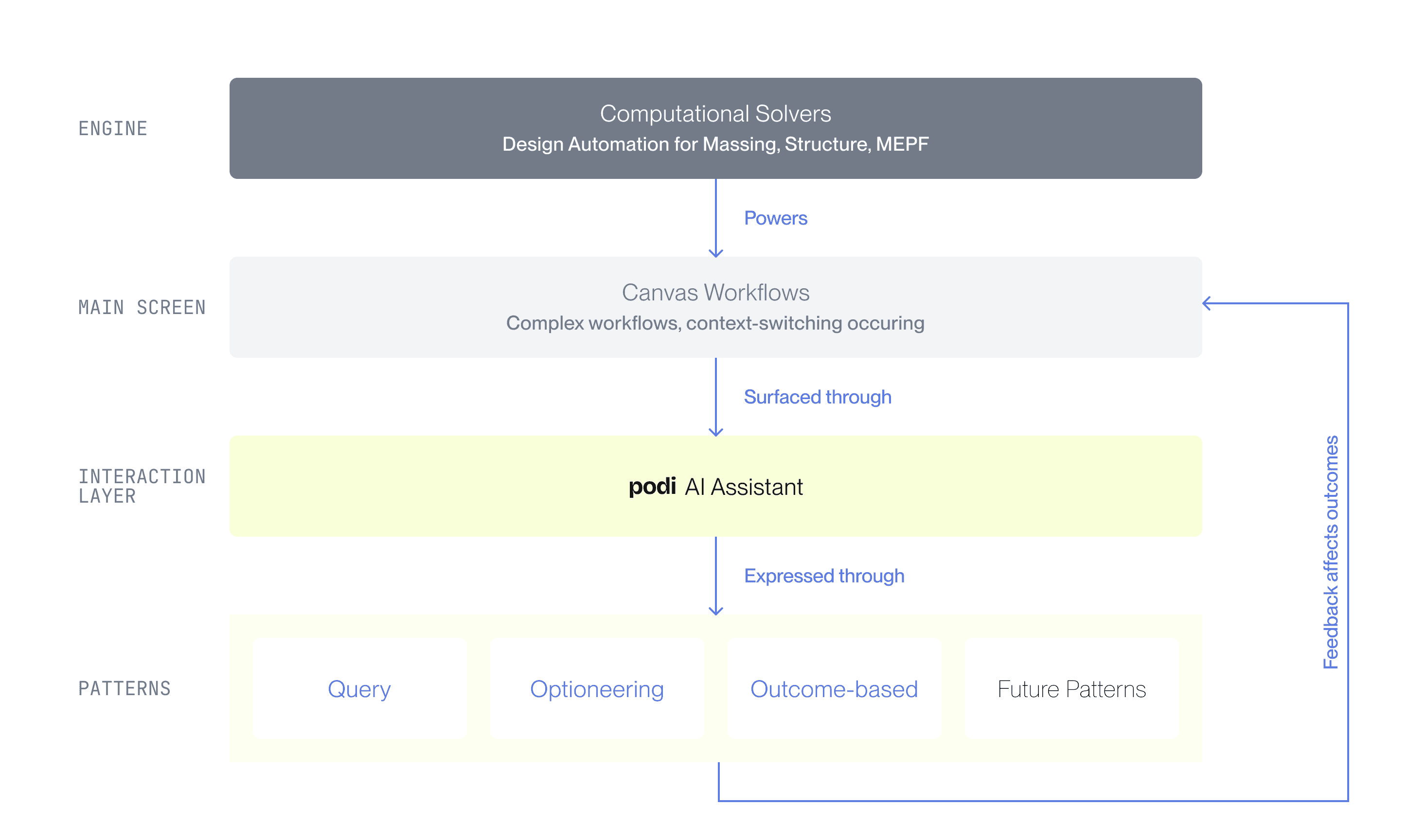
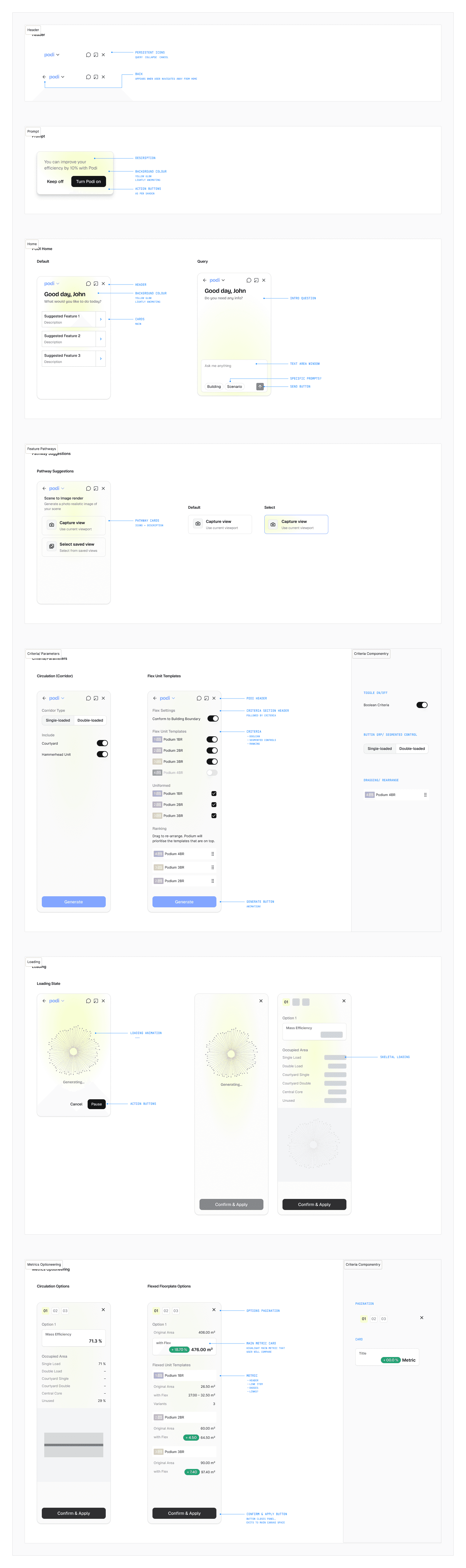
Core interaction patterns were defined in line with how users approach tasks – asking, exploring and evaluating outcomes. These patterns provide consistent ways to surface Podi across workflows, enabling teams to apply it in new contexts while maintaining coherence.
01
Query Pattern
The Query pattern is accessible from the top header through the speech icon. It serves as both an input channel and feedback loop, enabling users to refine generated outputs.
QUERY PATTERN
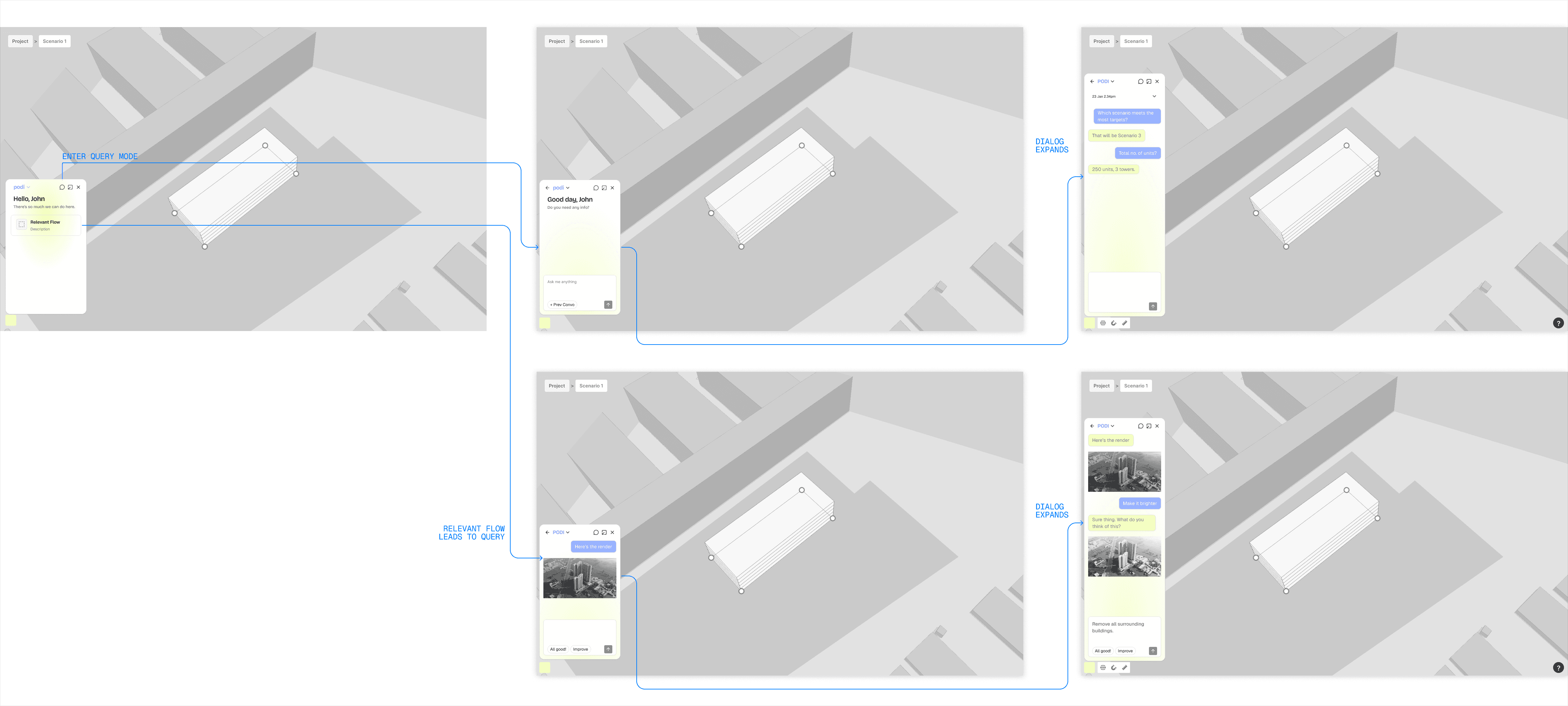
IMAGE GENERATION FLOW
02
Optioneering
Allows users to quickly explore multiple design outcomes by running solvers on a lightweight scratch model. This supports exploration without committing to full workflows and reduces iteration time significantly, resulting in a more responsive and supercharged experience.
OPTIONEERING PATTERN
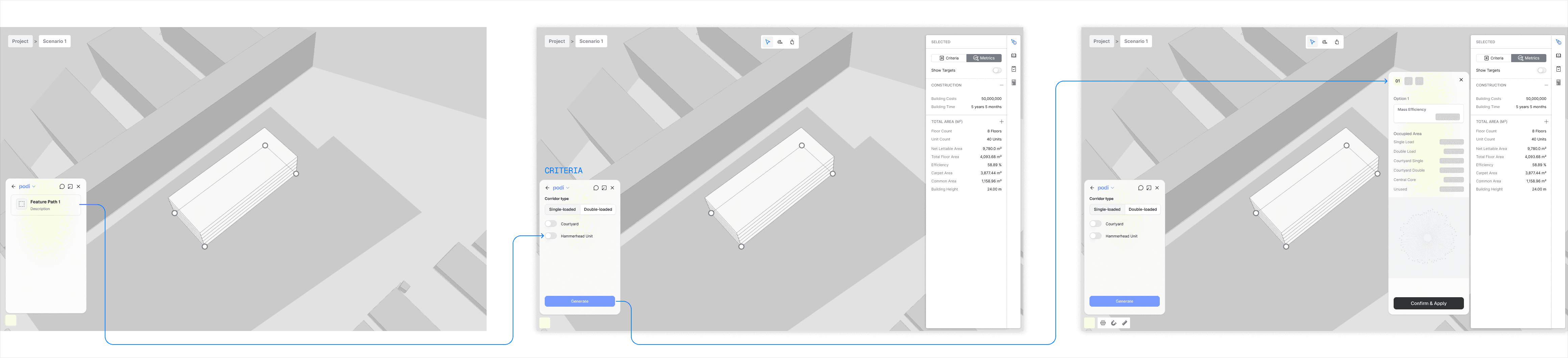
OPTIONEERING: CIRCULATION OPTIONS
OPTIONEERING: FLEX UNIT OPTIONS
03
Outcome-based Assistant
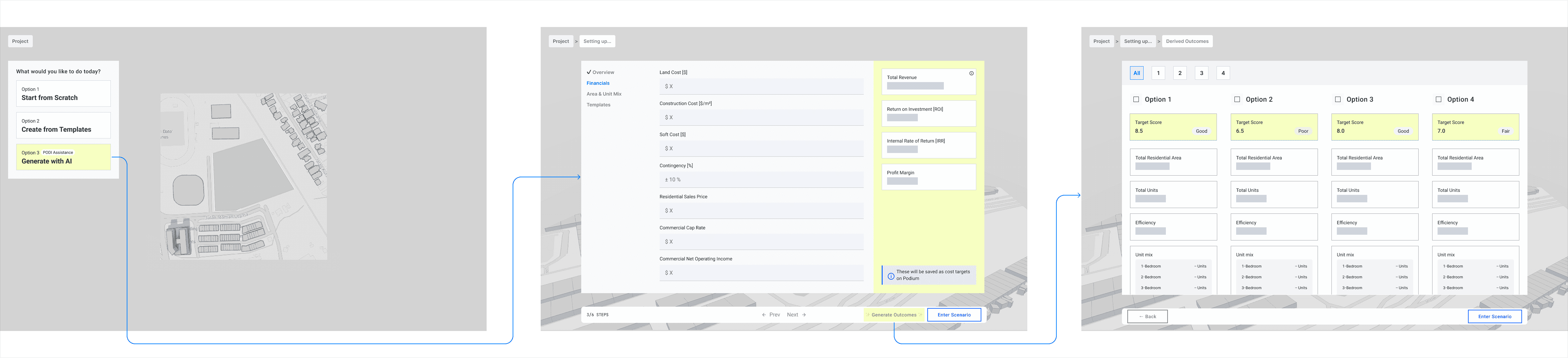
This pattern generates a set of possible outcomes from user input before entering the canvas, helping users quickly evaluate options and start from a stronger baseline.
OUTCOME-BASED PATTERN
The Podi Design System
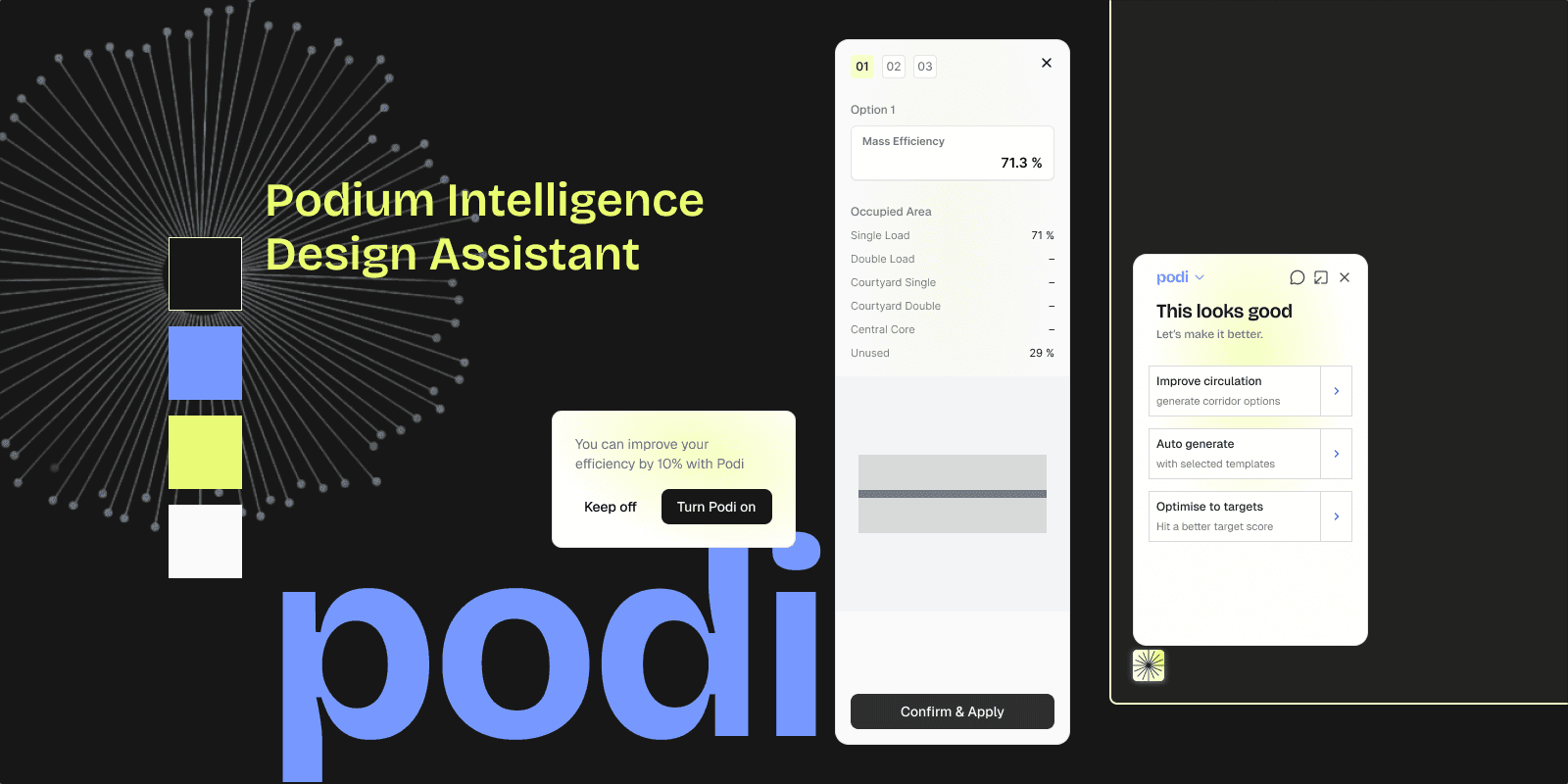
A library of design components were created based off Shadcn, ensuring the overall look is distinguishable from the usual Podium interface.
FINAL UI
BASE44 PROTOTYPE
Outcome
Increased
discoverability
of features previously buried in UI.
AI capabilities that were underutilised and disconnected from workflows are now accessible.
~1 month saved
(and counting)
By leveraging the Podi patterns, new AI features ship without full design cycles, saving ~1 month of design & development to date.
Learnings
Strategic restraint
Labelling something as "AI-powered" means nothing if the workflow doesn't actually feel more intelligent. Full automation is not the solution either, our early testing revealed that users did not trust it. The real challenge for us was finding the right level of collaboration. The value of AI lies not in the technology itself, but in how it is integrated into real user workflows.
From exploration to shipped
Podi began as a blue-sky thinking exercise, with no real brief. As platform capabilities mature, the concept became viable and eventually a real feature. It's a reminder to myself to stay curious and continue exploration. It can sometimes become real work, just ahead of schedule.